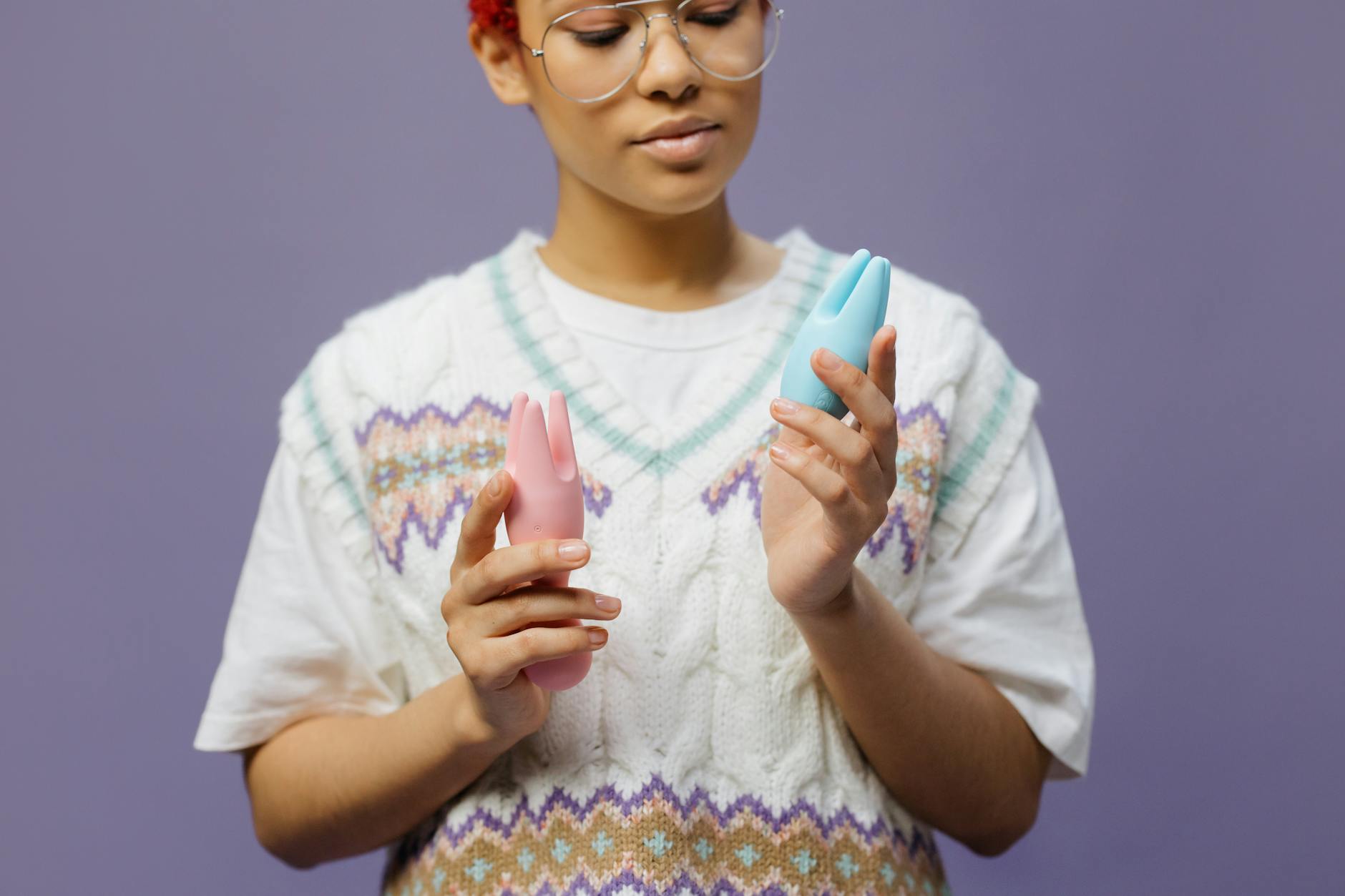
Estrogen isn't just about fertility. It shapes how your skin feels, how quickly your body responds to touch, how much natural lubrication you produce, and how easily blood flows to your genitals when you're aroused. When estrogen is stable, your lemon vibrator works the way you expect. When estrogen swings or bottoms out, the same device can feel unpredictable.
Low estrogen thins the vaginal tissue and reduces blood flow to the clitoral area. This means:
The outer layers of skin become more fragile and can feel tender with intense direct pressure. Your body takes longer to swell and become engorged when aroused. Lubrication decreases, making the clitoris feel slightly drier. Orgasms might feel less intense or require more stimulation to build.
Here's what doesn't change: the clitoral nerve density stays the same. Your brain's pleasure circuitry is unchanged. The capacity for a genuinely satisfying orgasm is still there.
The issue isn't broken hardware. It's friction and timing.
Period cycles, stress, travel, and certain medications cause estrogen to spike and dip throughout the month or year. This means that sometimes your lemon vibrator feels perfect, and three days later, the same intensity feels too strong or oddly numb.
This is genuinely annoying, and it's also completely normal. The variable here isn't your body failing you. It's your body's chemistry shifting.
Most of my clients don't expect this volatility, so they assume something is wrong. Then they blame the device, or worse, blame themselves. Neither is true.
1. Switch to a suction-based approach. If you're used to vibration-only stimulation, the shift to a lemon vibrator's suction pattern can feel gentler on thinner tissue while actually delivering more sensation. Suction engages nerves differently than vibration, and it requires less friction. Start on the lowest pattern, hold steady contact for 20-30 seconds, then increase gradually. You're not hammering at intensity. You're building pressure.
2. Use lube strategically. Low estrogen means less natural lubrication, but over-applying lube can dull sensation through a vibrator. Use a quarter-teaspoon of water-based lubricant directly on the clitoris, then another small amount on the opening of your Lem or clitoral vibrator. This minimizes friction without drowning the sensation. Reapply every few minutes if needed.
3. Extend your warm-up time. When estrogen is low, your body needs 20-30 minutes of non-genital foreplay before genital stimulation begins to work well. This isn't a failure of your lemon vibrator. It's how your blood flow works when estrogen is down. Read something arousing. Touch your breasts, your neck, your inner arms. Let your body actually become aroused before you introduce the device. Then the vibrator has something to work with.
If you menstruate, estrogen fluctuates predictably:
High estrogen phase (ovulation, roughly days 12-16 of a 28-day cycle): Your lemon vibrator will likely feel stronger. You'll build arousal faster. Orgasms might come easier. You can use higher intensity. Use this window to explore what your body likes.
Low estrogen phase (after ovulation and leading into menstruation): You'll need the adjustments above. Don't fight it. Plan for longer warm-up time. Use suction instead of pure vibration. Pad yourself with extra lube. This isn't deprivation. It's matching the tool to your body's current state.
Right after menstruation: Estrogen is climbing. You might find that mid-week is your sweet spot for intensity. Plan your self-pleasure time then if possible, rather than fighting your body chemistry.
Hormonal birth control flattens your estrogen curve, keeping it steady rather than cycling. This is either great news or complicating news, depending on the formulation.
Some people find steady low-to-moderate estrogen (like the minipill) means their lemon vibrator response is predictable but requires the low-estrogen adjustments all the time. Others find combination pills keep estrogen high enough that their vibrator response matches their non-pill baseline.
If you've recently switched to birth control and your clitoral vibrator suddenly feels different, it's almost certainly the hormones. Give it three cycles to settle. If it hasn't normalized by month three, talk to your doctor about whether a different formulation might work better for your pleasure alongside its contraceptive role.
If you're with a partner, the single most useful thing you can do is name the pattern without shame. Say something like: "My body responds differently at different times of the month, so sometimes this intensity feels perfect and sometimes it needs adjusting." Most partners appreciate the clarity.
Then make it collaborative. Show your partner the pattern. Let them hold the vibrator sometimes. They can feel whether you're responding to movement or suction. They can notice when you shift from relaxed to engaged. This removes the guesswork and makes pleasure a team sport rather than a performance.
If your lemon vibrator has stopped working even with all these adjustments, or if sensation has completely disappeared, you might be dealing with something else: blood pressure medications, certain antidepressants, or thyroid dysfunction all affect genital blood flow independent of estrogen. So does chronic stress and sleep deprivation.
These deserve a separate conversation with a doctor, not a band-aid fix with your vibrator.
Your estrogen won't be the same at 25 and 45 and 65. This isn't tragedy. It's biology. The lemon vibrator that worked perfectly at 30 might need recalibration at 50. So what. You adjust. You learn. You stay curious about what your body needs.
In fact, many of my clients report that understanding these patterns has made their pleasure better, not worse. Because once you stop expecting your body to respond the same way every single day, you can actually work with what you've got instead of fighting it.
They work differently, not worse. The suction mechanism of a lemon vibrator can actually be more effective on low-estrogen tissue because it doesn't rely on friction the way some vibrators do. You'll need to adjust your approach, but "doesn't work" isn't accurate.
Yes, though you might find the sensation changes. Some people prefer less intense stimulation during their period because the pelvic floor can feel more tender. You might also want to skip it on your heaviest days just for comfort, not because there's anything unsafe about it. Listen to your body.
Likely yes. Hormone replacement therapy increases estrogen and usually brings back the faster arousal response and stronger sensation you might have experienced before your estrogen dropped. Some people find they need less lube, can tolerate higher intensity, and see faster orgasm response. Others adjust gradually. Talk to your provider about what to expect.
Yes, but it's a compounding issue. Antidepressants can muffle your ability to feel sensation, and low estrogen reduces blood flow on top of that. You might need to address both separately with your doctor. This isn't a lemon vibrator problem. It's a medication problem that requires professional input.
Notice the pattern. If sensation is consistently lower at the same point in your cycle month after month, estrogen is likely involved. If it's unpredictable and doesn't follow a cycle pattern, it's probably something else: stress, medication, relationship dynamics, health changes. Different problems need different solutions.
Completely normal if it follows a pattern. If it's random and bewildering, that suggests either estrogen fluctuation (track it for two cycles to confirm) or another variable you haven't identified yet. Keep a simple note: intensity level used, how it felt, where you were in your cycle if applicable. Data tells a story.
Your pleasure is allowed to be conditional. It's allowed to require adjustments. You don't need a perfect biological baseline to deserve pleasure. You need awareness and willingness to adapt.
The lemon vibrator sitting in your nightstand isn't a promise that you'll feel amazing every time you use it. It's a tool that works better when you understand what your body needs right now. Some days that's 15 minutes and patience. Other days that's 30 minutes and suction and lube and a partner's hands while you hold the vibrator. Neither version is the right version.
Both are yours for the taking.
If you're struggling with these patterns or want to explore your pleasure more deeply with professional support, we're here to help. Reach out at Hello Nancy anytime.