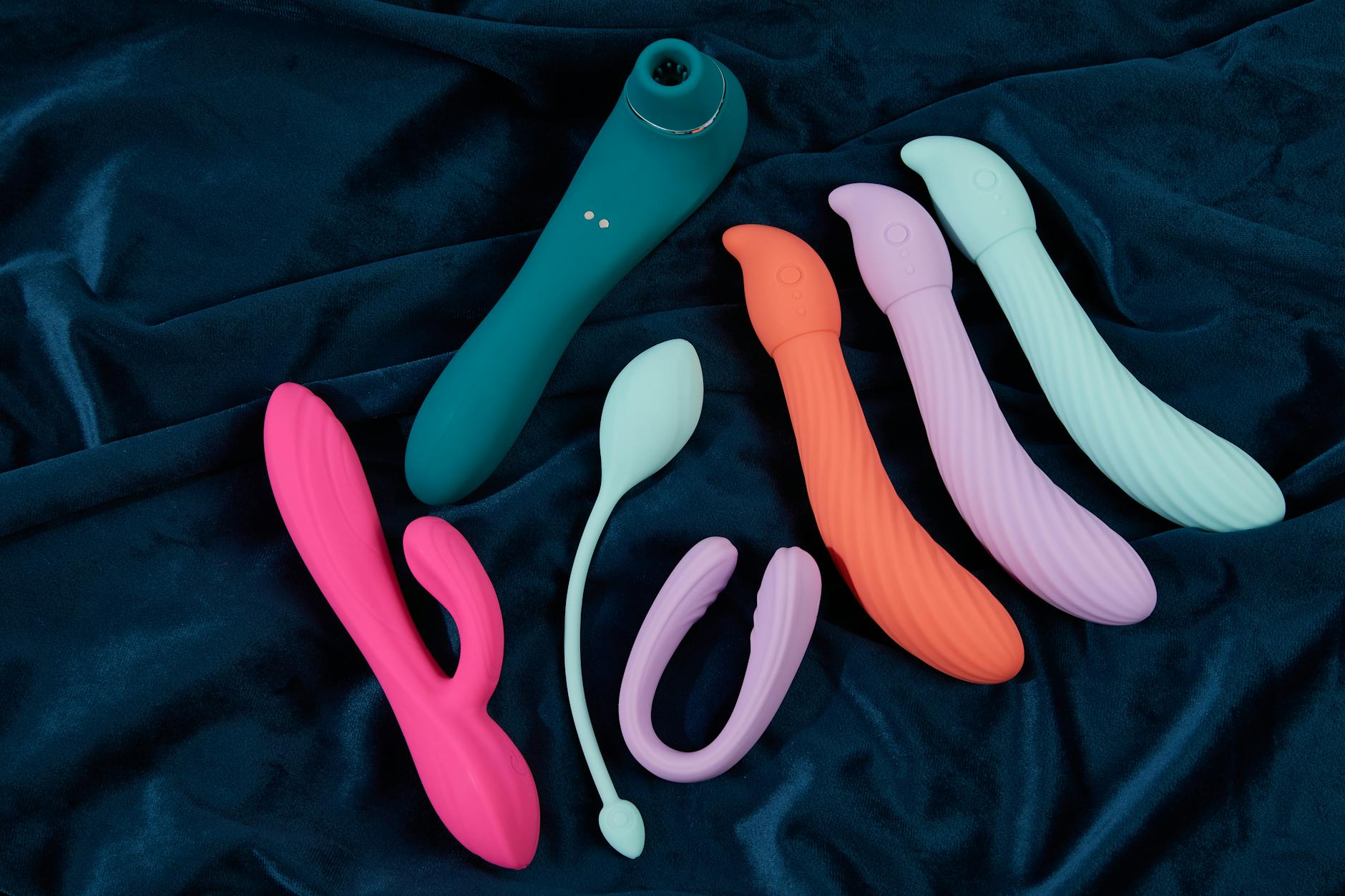
The conversation about adding a lemon clitoral vibrator to your shared sex life doesn't have to be awkward. Here's how to frame it, introduce it, and actually enjoy it together.
Introducing a lemon vibrator to partnered sex isn't about apologizing for what your body needs. It's about inviting your partner into something that makes you feel good. And here's the thing: when you frame it that way, most partners get it immediately.
I've worked with hundreds of couples navigating this moment, and the ones who do it successfully share one quality. They separate the vibrator conversation from the relationship conversation. One is about pleasure. The other is about connection. Confuse them, and both conversations collapse.
There's a specific moment when people introduce a lemon vibrator to partnered sex, and it's almost never during the conversation you think it should be. Don't bring it up mid-argument, mid-drought, or as a solution to a deeper intimacy problem. If your sex life has flatlined, a vibrator won't restart it. If resentment is building, a toy won't dissolve it.
The right moment is when you're already feeling connected. After a good conversation. After a date. After sex that left you both satisfied and wanting more. Your partner will hear "I'd like to try something" very differently when they don't also hear "because what we have isn't working."
If your relationship is struggling, consider talking to a couples counselor first. A lemon clitoral vibrator works best as an addition to something that's already stable, not as a bandage over cracks.
You don't need a grand moment. You need honesty and specificity. Here's the shape of it.
Start with desire, not dysfunction. "I've been thinking about trying something that might feel amazing for me" lands differently than "I can't come without this." One is about expansion. The other sounds like failure. Even if the second one feels true, the first one is also true. Lead with that.
Name the vibrator. "A lemon vibrator" or "The Lem" is concrete and less scary than "a vibrator," which conjures every assumption they've ever had. The lemon sucker technology is genuinely novel. It's not mimicking a penis. It's doing something completely different. That specificity helps.
Explain what it actually does. "It uses suction and pulsing patterns, not vibration exactly. It feels different from anything else." Most partners' fear isn't that the toy is better than them. It's that it's unfamiliar, which reads as threatening. Familiarity dissolves threat.
Make it about curiosity, not complaint. "I want to experience different sensations" is cleaner than "sex isn't satisfying enough." You can say both things are true, but one opens the door, and one closes it.
Invite participation. "I'd love for you to be part of this" or "I think you might enjoy watching" gives your partner a role in the experience, not just in the purchase. They're not being replaced. They're being invited.
If your partner resists, don't push. Ask what the resistance is actually about. Is it about feeling inadequate? About not understanding the toy? About discomfort with sex toys generally? The objection is usually a door into a deeper conversation.
Once you have the conversation and you've ordered a Hello Nancy lemon clitoral vibrator or lem vibrator, the integration is usually easier than the discussion.
Start solo first. Use it alone, get familiar with it, find your favorite patterns. This is about you learning your own pleasure, not performing anything. When you come back to partnered sex, you already know what works. That confidence changes everything.
Show, don't tell. Invite your partner to watch you use it. Not as a performance, but as information. They see where you place it, what patterns make you breathe change, how your body responds. This is education. It's also deeply intimate.
Use it during foreplay. Before you incorporate it during partnered penetration, try using a lemon sucker vibrator during oral sex or hand sex. Your partner might hold it while they're doing something else. Or you might hold it. Either way, it's a small integration that builds comfort on both sides.
Try it during intercourse. If you're having penetrative sex and want to add clitoral stimulation, this is where a lemon vibrator shines. The compact design means it works alongside a partner, not instead of one. You can position it between your bodies, or you can hold it while they're inside you. The sensation of both at once is often completely new for people who've never tried it.
Check in. "Does this feel good?" isn't just about logistics. It's a permission structure. You're telling your partner that you want sex to work for both of you, and you're willing to adjust. That vulnerability actually deepens intimacy in most relationships.
Most couples who hit friction around introducing a lemon clitoral vibrator aren't actually blocked by the vibrator. They're blocked by something underneath.
Your partner thinks the vibrator means they're not enough. This is the most common one. Your job is to be clear and repeat it: "You are enough. I want more sensation, not a different partner." There's no magic script. You say it, you repeat it, and over time they believe you because you keep acting like it's true. You're still initiating sex with them. You still orgasm from their touch. The vibrator is an instrument, not a replacement.
You feel like you're asking for too much. This one lands in bodies as shame. You think wanting a lemon vibrator means you're broken or demanding. You're not. You're curious. You deserve that curiosity to be met with warmth, not judgment. If your partner can't offer that, that's information worth paying attention to.
There's underlying disconnect about sex generally. If your partner doesn't like sex, or resents it, or feels obligation instead of desire, a vibrator won't fix that. It will highlight it. If you suspect this, the real conversation is bigger than the toy. That's where couples therapy actually helps.
They think it's something they should be ashamed of too. Some partners come around to the vibrator but treat it like something illicit, something you only do alone or with shame. That limits what's possible. If you're going to integrate a lemon vibrator into partnered sex, you're also integrating the idea that pleasure is normal, curiosity is healthy, and tools that help are good.
Here's what I see shift when couples get past the conversation part. They realize the vibrator isn't a threat to their sex life. It's often an expansion of it.
Partners often say things like: "I loved watching you come like that." Or: "I didn't know you could respond that intensely." Or: "I want to figure out how to use this with you more." That's what happens when someone stops seeing the lemon vibrator as a judgment on what they've been doing and starts seeing it as a doorway to new pleasure.
Use good lubricant. Water-based works with silicone toys. Start at a lower intensity. Most people are shocked at how much sensation a lemon sucker vibrator can deliver at pattern two or three. If you're new to vibrators, or if you have sensitivity, start low.
Take breaks. You don't need to use it every single time you have sex. The goal isn't to need it. The goal is to have access to it when you want something different.
Keep talking. "What felt good?" and "What do you want to try next?" aren't questions you ask once and stop asking. Sex evolves. So does the conversation.
When you introduce a lemon clitoral vibrator together, you're not trying to fix sex. You're trying to expand it. Most partners, when they understand that distinction, become genuinely excited to explore it with you.
No. In fact, the opposite often happens. When you have access to different types of sensation, you become more attuned to what feels good and what doesn't. This actually makes partnered sex more satisfying, not less. Sensitivity isn't a fixed resource. It expands.
That's completely fine. Lots of people use vibrators solo, and that's entirely separate from partnered sex. The integration is optional. You're not obligated to perform your pleasure for anyone. If your partner eventually wants to watch or participate, great. If they don't, that's their boundary and you respect it.
Reframe it as discovery, not deficit. "I want to explore what different sensations feel like" is fundamentally different from "you're not doing it right." One is about you. The other is about blame. You already know the difference. Use that language shift.
Depends on the type. Penetrative sex? Absolutely. Oral sex? Sometimes, though it can be in the way. Manual stimulation? Yes, especially if your partner holds it while they're touching you elsewhere. You'll figure out what works through trial and error, and that experimenting is often the most fun part.
That tension often isn't about the vibrator. It's about something deeper like feeling inadequate, fear of change, or disconnection that already existed. Use it as an opening to a bigger conversation, potentially with a couples counselor who understands sex-positive frameworks. The vibrator is just the catalyst.
You ask. "I want to check in. Are you genuinely good with this, or are you just going along?" People's bodies don't lie. If your partner suddenly becomes less engaged, less present, or more withdrawn during sex, that's data. Name it kindly. "I notice things feel different. What's going on?" That's the conversation that matters.
Introducing a lemon vibrator with your partner works best when both people remember the same thing: you're still choosing each other. The vibrator is just one of many ways to make that choice feel good. And honestly, for most couples, that clarity changes everything.