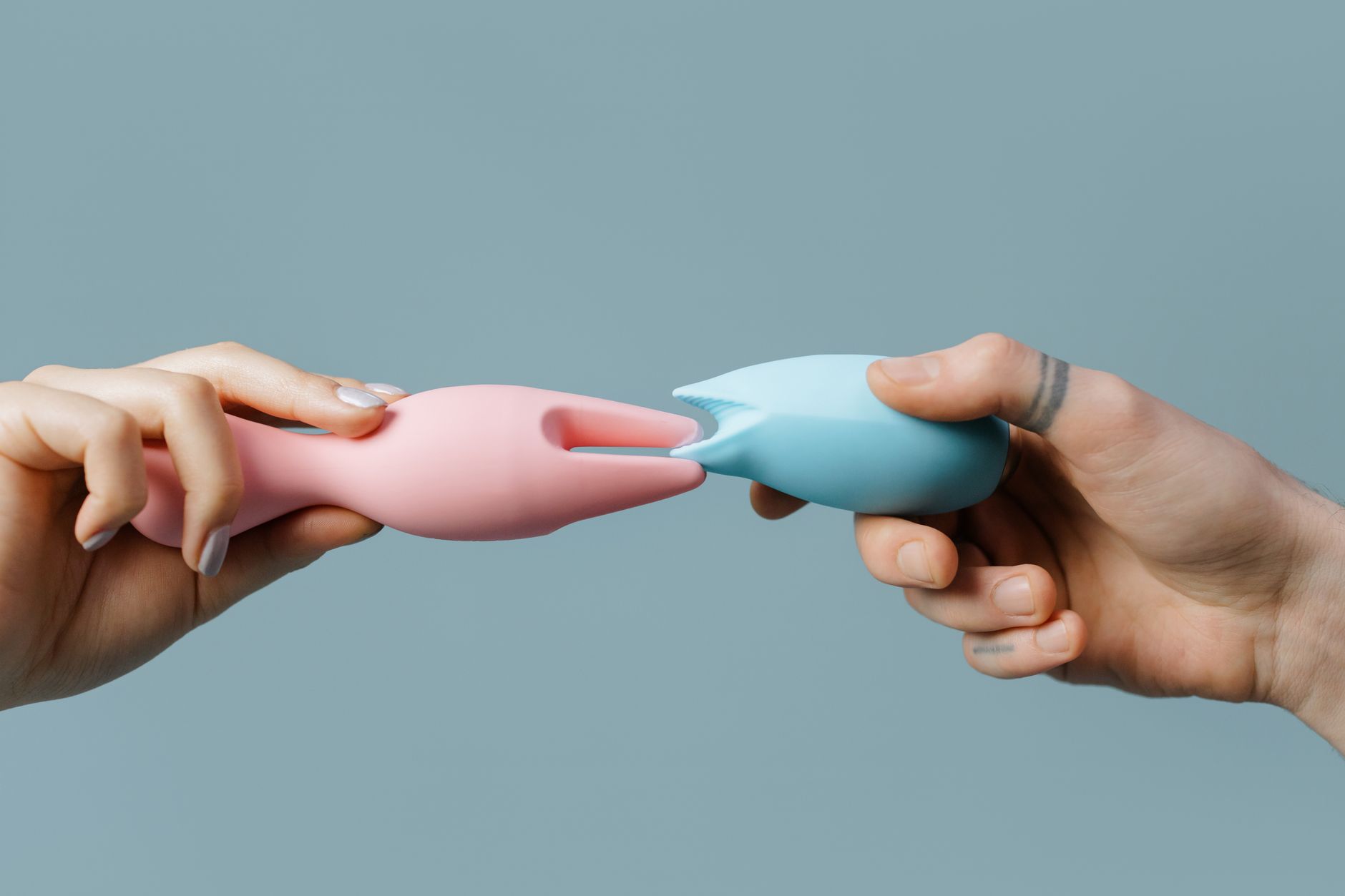
How to Use Lemon Vibrators When Experimenting With Different Stimulation Patterns
Not every vibration rhythm works the same way. Here's how to dial in the patterns that match your body's actual preferences, not what you think should work.
If you've ever used a clitoral vibrator and wondered why one setting feels magical while another does absolutely nothing, you're not imagining it. Your body isn't broken. The pattern just didn't match your nervous system's actual preference in that moment.
This is the part nobody mentions: lemon vibrators, like all clitoral suckers and air-suction devices, work through stimulation patterns. Speed alone doesn't determine what feels good. The way the sensation builds, pauses, intensifies, or repeats is what actually matters. When you're experimenting with different stimulation patterns, you're not being picky. You're doing the work to understand how your own pleasure actually works.
Your clitoris has around 8,000 nerve endings. These nerves don't all respond the same way to the same input. Some fire up with steady rhythm. Others need variation. A few require the sensation to build gradually before they light up at all.
Lemon clitoral vibrators and similar suction toys move through several pattern types. Some devices offer a steady pulse that repeats identically each cycle. Others build in acceleration, stepping up the intensity gradually. Some combine waves with peaks. Some alternate between light and deep pressure.
Here's what I've observed: people who think they "can't" respond to vibration often haven't found the right pattern yet. They've tried one setting, it didn't land, and they assumed their body wasn't into it. A different rhythm sometimes changes everything.
Steady rhythms stay consistent throughout. One pulse repeats at the same speed and intensity without variation. This works beautifully for people who like predictability or who need to build arousal slowly. The consistency allows your nervous system to settle in and recognize what's coming next, which can deepen sensation over time.
Building rhythms escalate gradually. Intensity ramps up across several seconds or pulses, peaks, then either holds or drops back down. People often prefer these when they're working toward orgasm, since the escalation mirrors how arousal naturally builds in the body.
Mixed rhythms combine multiple patterns. A few pulses at one speed, then a shift to a different rhythm. Some people find variety keeps them engaged longer. Others find it disorienting. Both reactions are normal.
Instead of spinning through every setting randomly, try this approach.
Start with what feels neutral, not amazing. Choose a pattern that's pleasant but not your obvious favorite. You're gathering information, not chasing an orgasm yet.
Spend two to three minutes with one pattern. Your nervous system needs time to acclimate. Most people shift settings after 30 seconds because they think it's not working. Usually they're just bored. Give it time.
Notice three things: the texture of the sensation, whether you want it faster or slower, and whether you need variation or consistency. Don't judge whether it's "good." You're mapping your preferences.
After exploring for a few minutes, rate it on a simple scale: "not for me," "nice but meh," "really good," "excellent." Move to a different pattern. Repeat.
Over a few sessions, patterns will emerge. You'll notice you consistently rate building rhythms higher than steady ones, or vice versa. You'll discover that mixed patterns lose you but simple ones keep you focused. This isn't something to overthink. It's just information about how your body is wired.
Even with the same vibration pattern, the amount of contact between the device and your body changes everything. Light suction feels like a whisper. Firm suction feels like pressure.
When you're testing patterns, keep the pressure consistent. Use the same amount of contact with the device across multiple pattern trials. Only after you've figured out which patterns appeal to you should you start adjusting pressure.
Many people reverse this. They test patterns while unconsciously changing how hard they're pressing the lemon clitoral vibrator against themselves, then confuse pressure changes with pattern preferences. You end up thinking a pattern is terrible when really you just needed lighter contact with it.
Here's something crucial: the pattern that works best for you today might not be your favorite next week. Your cycle, stress level, what you had for breakfast, whether you slept well, medications you're on, and even the time of day all shift how your nervous system responds to vibration.
A building rhythm that felt perfect last month might feel too slow now. A mixed pattern that exhausted you before might suddenly feel dynamic and engaging. This isn't inconstency. It's normal variation. Your body isn't a machine.
I usually recommend choosing two or three favorite patterns and rotating between them rather than fixating on one perfect setting. It keeps things fresh and matches the reality that your preferences genuinely do shift.
Too intense. Too choppy. Too boring. Too erratic. These are legitimate signals, and they usually mean one of three things: the pattern doesn't suit you, the pressure needs adjustment, or you're not warmed up enough yet.
If a pattern feels too intense, try the same pattern with lighter contact first before abandoning it. If it feels too boring, you might need a building or mixed rhythm instead of steady. If it feels too erratic, try a smoother, more predictable pattern.
If you've adjusted pressure, given yourself proper warm-up time, and tried a few variations, and a pattern still feels wrong, it just might not be for your body. That's fine. Keep exploring.
When you're exploring alone, you have zero performance pressure. You can spend 20 minutes trying the same pattern five different ways without worrying whether a partner is bored or waiting. You can actually learn what you like instead of just chasing something in a specific timeline.
Most people discover their real pattern preferences through solo exploration first. Once you know what you genuinely respond to, conversations with partners become easier. You're not guessing. You have actual data about your body.
Once you've mapped your favorite patterns alone, you can layer in other input. Some people find that combining a particular vibration pattern with clitoral stimulation from a partner's hand or mouth creates something entirely different. Others like using a pattern while penetration is happening. Some prefer keeping patterns isolated and separate from other activities.
There's no right approach. Experiment. Notice. Adjust.
Your nervous system isn't static. Hormones, stress, sleep, food, medications, and even what you're thinking about shift how your clitoris responds to vibration. The pattern isn't changing. Your receptivity is. Both variables matter.
At least two to three minutes. Your nervous system needs time to register and respond. If you change settings every 30 seconds, you're gathering noise, not data. Patience matters here.
Absolutely. Sometimes the buildup of sensation makes a pattern feel overstimulating when it was perfect a minute ago. Your body is saying "I need a break" or "I need something different now." Listen to that signal. Switching patterns mid-session is smart, not a failure.
No. Some people orgasm fastest with steady, predictable patterns. Others need building rhythms. A few reach orgasm most easily with mixed or varied patterns. The best pattern is the one that works for your body, and that can vary across your cycle, your life, and even your mood.
Design philosophy differs. Some brands prioritize depth over variety, offering fewer patterns but perfecting each one. Others maximize choice. More patterns isn't objectively better. It's about whether you prefer exploring a huge range or getting really familiar with a smaller set.
Start with the most distinct pattern options first, not the subtle ones. Some people find the difference between steady and building obvious immediately. Others need their body warmed up and aroused before variations become noticeable. Give yourself time. If you're having trouble distinguishing patterns even after several attempts, a different type of stimulation device might suit your body better.
Experimenting with stimulation patterns isn't overthinking pleasure. It's gathering knowledge about your own body. The more you understand how you actually respond to different rhythms and pressures, the better you can communicate your preferences to yourself and to partners. You stop guessing. You start knowing.
If you're ready to explore patterns in depth, a quality device like a lemon clitoral vibrator offers enough pattern variety to make the learning curve interesting without being overwhelming. Start with curiosity rather than expectation. Let your body teach you what it actually likes.
Have questions about finding the right pattern for you or other aspects of using lemon sexual toys? Get in touch with us.