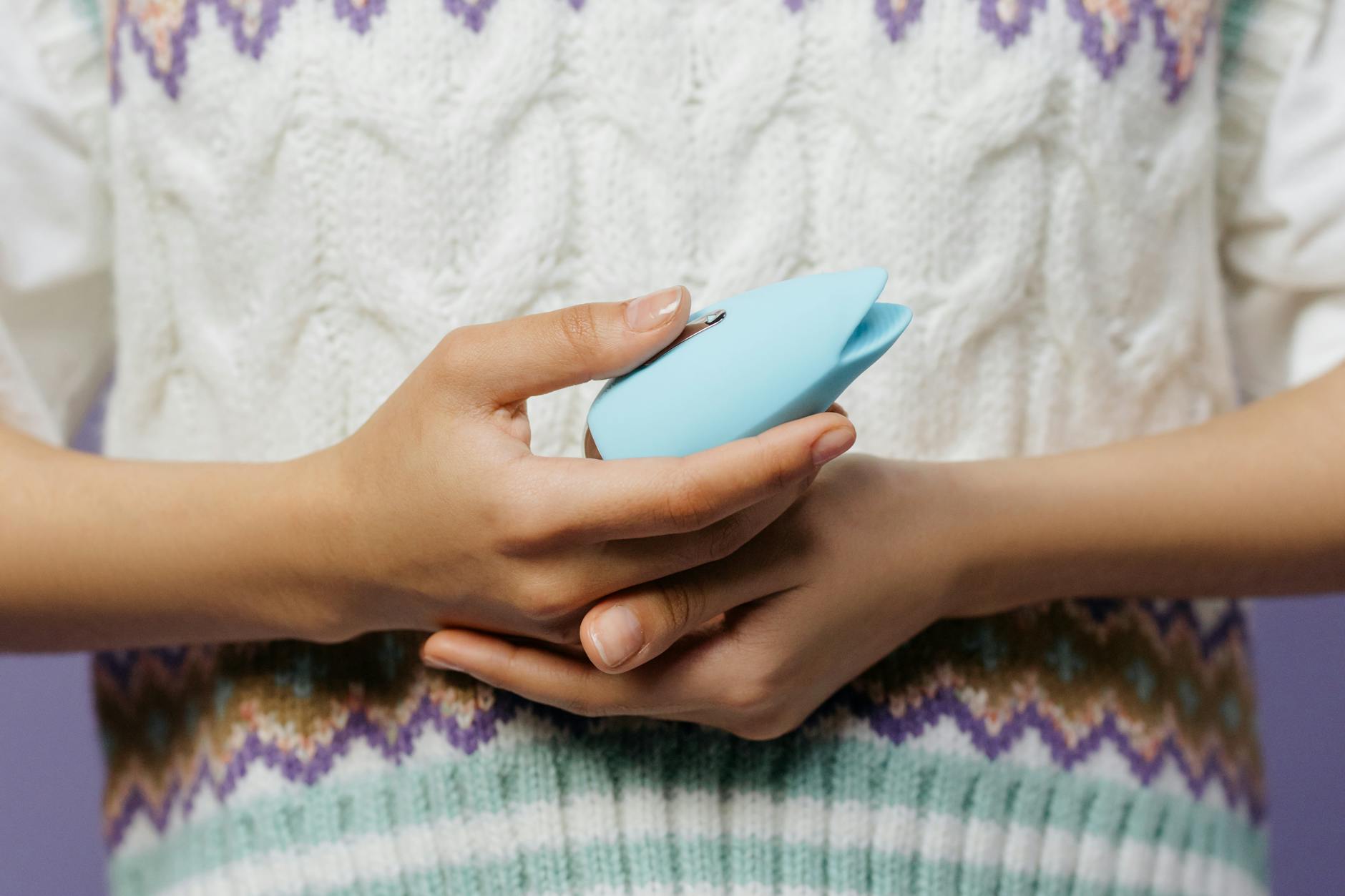
How to Use Lemon Vibrators When Intimacy Feels Disconnected After Grief
Loss shifts your nervous system. Your body goes into protection mode, and pleasure feels impossible. Here's how lemon vibrators can help you gently rebuild connection to yourself and your partner.
Grief doesn't just affect your mood. It rewires your entire nervous system. Your body goes into protection mode. Arousal feels impossible. Touch that used to feel good now feels intrusive or empty. Many people describe this as numbness, but it's actually your body doing exactly what it's supposed to do when threatened by loss.
When we experience loss—whether it's the death of a loved one, the end of a significant relationship, or a major life transition—our brain's threat-detection system activates. Cortisol and adrenaline increase. Blood flow redirects away from your genitals and toward your muscles. Your vagus nerve, which regulates the parasympathetic nervous system (rest, digestion, arousal), gets stuck in sympathetic mode (fight, flight, freeze).
This is evolutionary. Your body doesn't think "this is a good time for pleasure." It thinks "I need to survive this."
Many of my clients going through grief report that sex feels like an obligation, a disconnection from their partner, or worst of all, a betrayal of the person they've lost. Some describe numbness in their genitals specifically. Others feel touched-out after caregiving or emotionally exhausted. All of this is normal. None of it means your sexuality is broken.
First: autonomy. With a partner, grief intimacy often comes loaded with expectations, guilt, or the pressure to be "ready." A lemon clitoral vibrator lets you explore arousal on your own timeline, without anyone else's emotional weight attached. You're not performing. You're experimenting.
Second: pacing. Grief slows everything down, and that includes arousal. Traditional vibrators often demand intensity. Lemon vibrators offer precision and pacing you control completely. You can start with a barely-there pattern and stay there for as long as you need, building arousal slowly instead of chasing it.
Third: re-entry. Grief numb feels different than other numbness. It's protective, not permanent. A lemon sucker's gentle, focused sensation can coax your nervous system out of freeze mode without feeling aggressive. The clitoral vibration pattern itself is calming once you find the right rhythm.
If you're grieving, start alone. Here's what I recommend.
Choose a time when you feel slightly better. Not when you're in acute crisis, but when you've had a decent sleep or eaten something. You need just enough nervous system capacity to be curious.
Set up a protected space. Lock the door. Turn off your phone. Light something that smells good if that helps. Make the environment feel safe, not clinical.
Start with touch before the Lem. Spend 5-10 minutes touching your body—your arms, stomach, thighs—without any goal. This reconnects you to sensation after grief's numbness. Your nervous system needs permission to feel neutral touch first.
Use the Lem on lower patterns. Start at pattern 1 or 2. Let your body decide how long you stay there. There's no timeline here. The goal is sensation, not orgasm. Many people in early grief find that just noticing physical response without pressure to "finish" is enough to begin rewiring their nervous system.
Notice what happens without judgment. You might feel nothing. You might cry. You might feel a little spark that goes away. All valid. Grief isn't linear.
Before you use a lemon clitoral vibrator together, have a conversation not during sex. Say something like: "I'm starting to explore pleasure again. This isn't about anything you did or didn't do. I need to rebuild connection to my body. I'd like to invite you in when I feel ready, but I need to go at my own pace."
Many partners feel relieved to have a roadmap instead of guessing whether sex is welcome.
When you do introduce your partner, you're not aiming for partner penetration or complicated intimacy. You're aiming for co-presence. Your partner might hold you. You might use your lemon vibrator while they're present, not touching. You might show them the patterns you like so they understand your body better.
The Lem is excellent for this because it's quiet, discreet, and doesn't demand performance from your partner. They can simply be there while you experience pleasure on your terms.
Here's what's crucial: grief doesn't follow a five-stage model, and neither does grieving intimacy. Some people reconnect to pleasure within weeks. Others take months or years. Both are completely normal.
If you're in a partnership, check in regularly. "How are you feeling about intimacy?" isn't a one-time conversation. Grief shifts constantly, and your needs will shift with it.
If you're solo, give yourself permission to take breaks. Some weeks you might explore daily. Other weeks you might not touch your lemon vibrator at all. That's not failure. That's listening to what your body needs.
Sometimes grief and pleasure happen simultaneously, and that can feel confusing or even guilty. Some people describe reaching orgasm and then crying. Others feel arousal and immediately assume they're "moving on too fast."
This is real. Grief doesn't wait for permission. Neither does your body. Both can be true at once, and there's no moral weight to carry about that.
If you're feeling guilt about rekindling intimacy after loss, that's often worth exploring with a therapist. Grief and shame frequently travel together, and untangling them helps. Your pleasure is not a betrayal.
Using a lemon vibrator for pleasure after grief isn't just about orgasm. It's about retraining your nervous system to recognize that safety and sensation coexist. That touch can be welcome again. That your body isn't only for survival.
This is why the pacing matters so much. A slow, consistent pattern on a lemon clitoral vibrator tells your nervous system: this is manageable, this is chosen, this is safe. Over time, that message ripples out into the rest of your life.
My clients often report that reconnecting to pleasure through solo exploration shifts how they sleep, how much they laugh, how they show up in relationships. Pleasure is not separate from healing. It's part of it.
Completely. Grief literally deadens sensation. Your nervous system is protecting you. Using your lemon clitoral vibrator regularly—even if you feel nothing—is still retraining your body. Eventually, sensation will return. Some clients describe it as very gradual, like a light slowly brightening.
If you live with your partner or they're your primary support, transparency helps. You don't need graphic details, but "I'm exploring pleasure solo to help reconnect with my body" is honest and clear. It prevents them from finding your vibrator and misinterpreting why it's there. It also gives them a role: supporting your healing instead of feeling excluded.
No. You're not pushing your body into arousal against its wishes. You're offering it a gentle option. If it feels wrong that day, you stop. There's no failure. Grief is unpredictable, and your body's response will be too.
There's no mandatory timeline. Some people wait weeks. Others wait years. The question isn't "when is it appropriate?" but rather "do I feel even a tiny bit curious?" When curiosity appears—even small—that's your signal.
This is one of the hardest parts of grieving together. Your partner might be ready before you are, or vice versa. The bridge is often a lemon clitoral vibrator used solo while your partner's present—no pressure for anything else. Or explicit conversation: "I'm not ready for partnered sex yet, but I'd like to know you still find me attractive." Grief intimacy requires more words, not fewer.
Yes. And that guilt is usually worth exploring with a therapist. Pleasure isn't betrayal. Your body's capacity to feel good isn't an insult to the person you've lost. These are narratives grief tells, and they're changeable.
Grief rewires us, and that includes how we experience pleasure. Using lemon vibrators during this time isn't about "getting back to normal." Normal has shifted. It's about building a new normal where intimacy, grief, and joy coexist—sometimes in the same moment.
If you're rebuilding after loss, start small. Give yourself time. Use tools like your Lem not as pressure, but as permission: permission to feel sensation, permission to explore curiosity, permission to heal at your own pace.
Your body will heal. Pleasure will return. And when it does, you'll have learned that it's resilient, adaptable, and worth trusting. Questions about grief and intimacy? Reach out anytime at The Lemon Massagers.