You finish way before they do. Or they're done and you're still warming up. This is one of the most common friction points in couples' sex lives, and it rarely gets talked about honestly because it feels personal. Like someone's body is broken. It isn't. It's just how two different nervous systems work.
Speed mismatches aren't a sign you're incompatible. They're an invitation to stop performing for each other and start problem-solving together. And that's where lemon vibrators come in.
There's a persistent myth that good sex means reaching orgasm at the same time while maintaining eye contact. That's Hollywood, not biology. Here's what actually determines orgasm speed: nervous system sensitivity, hormones, arousal thresholds, medication side effects, stress levels, and previous sexual conditioning.
Two people built entirely differently sexually is the norm, not the exception. If you're frustrated that your partner takes longer, that frustration probably makes them tense, which makes it even harder to climax. You've just created a feedback loop that punishes both of you.
The other scenario: one person finishes quickly and the other has to decide between staying engaged solo or wrapping up unsatisfied. That resentment builds quietly over months.
When I work with couples on this, the turning point isn't about willpower or technique. It's usually about permission. Permission to use external tools. Permission to separate your orgasm from their orgasm. Permission to make pleasure equal instead of identical.
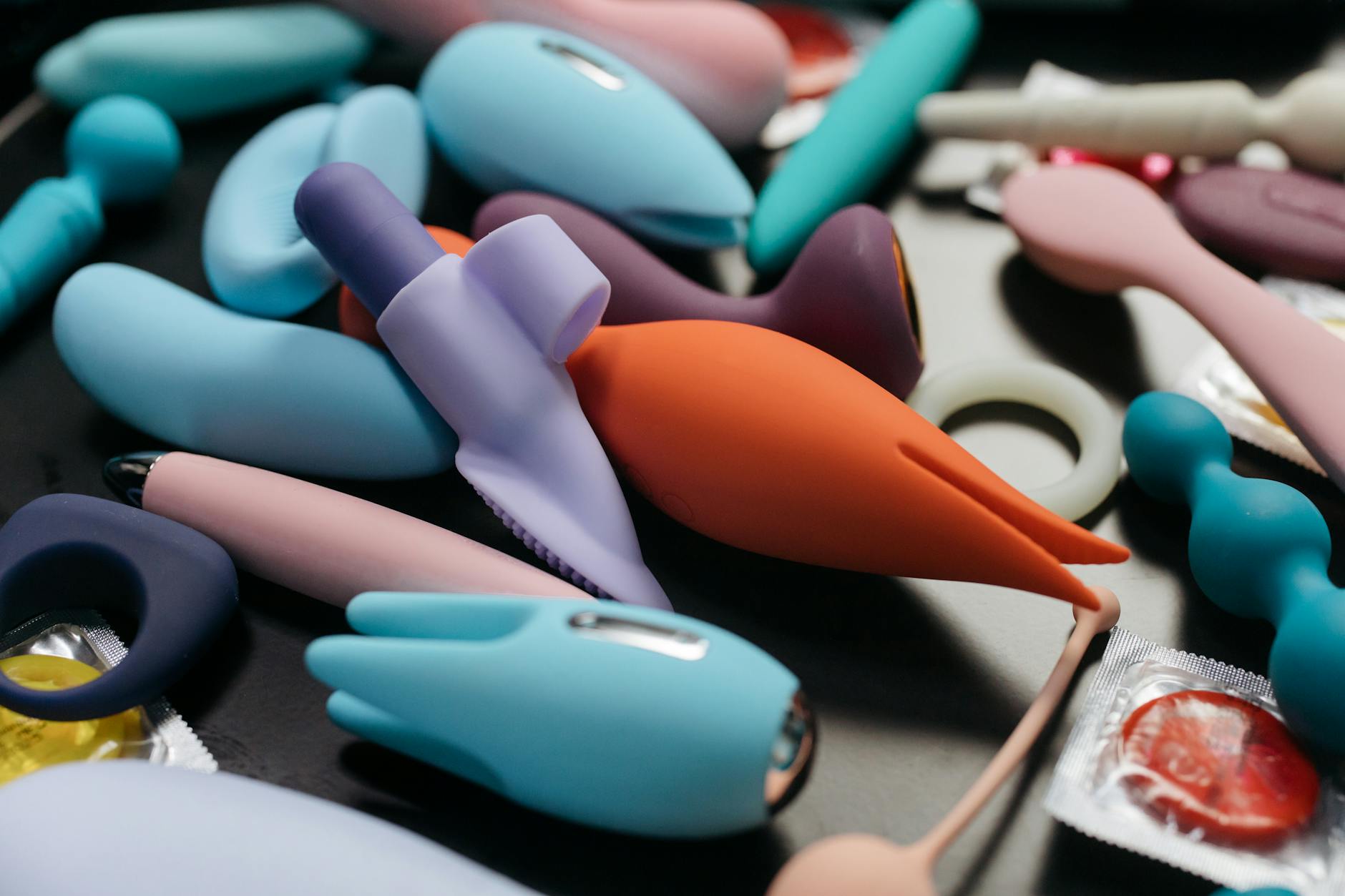
Lemon vibrators work for this specific problem because they're fast, portable, and honestly not that intimidating to most partners. A lemon clitoral vibrator doesn't replace intimacy. It accelerates one partner's timeline so you meet in the middle.
Think of it this way: if one of you typically needs 15 minutes and the other needs 5, a lemon vibrator can compress that 15 into 8 or 9. Suddenly there's actual overlap instead of one person watching, waiting, checking their phone. You're both present and actually building toward something together.
The design matters here. Lemon vibrators are specifically engineered for clitoral stimulation with high-frequency suction patterns. They're not just vibration. That distinct sensation often cuts arousal time in half compared to internal vibrators or solo fingering. For people who struggle to climax during partnered sex anyway, that's often the difference between disconnection and real connection.
This conversation matters as much as the tool itself. You can't just introduce a lemon vibrator mid-session without talking about it first, especially if either partner has shame or insecurity around toys. Here's how I'd frame it:
"I love being with you, and I notice we have different rhythms. I don't want either of us leaving satisfied. What if we tried something that would let both of us finish happy." Not apologetic. Not framed as a fix for a broken partner. Just logistics.
Practical stuff: decide in advance who uses it, when, and whether it's every time or just when you have the bandwidth for longer sessions. Some couples use it only when they want to extend sex. Others use it from the beginning to level the playing field. There's no right answer.
Get comfortable with the device separately first. If you're the person who'll use the lemon vibrator, solo exploration takes the pressure off. You learn what pressure feels good, which pattern works best, and you're not thinking about whether your partner is watching or judging. Then partnered sex stops feeling like a performance test.
Approach one: Parallel pleasure. You're inside them or they're on top. You introduce the lemon vibrator against the clitoris at the beginning and keep it there. This shortens their arousal phase so you finish closer to the same time. Low pressure, no stop-and-start. It just becomes part of what you do.
Approach two: Finish line strategy. Sex happens normally. When you notice one partner is close and the other isn't, bring the lemon vibrator in to compress that gap. It's not every time. Just when you both want to end together rather than in sequence.
Approach three: The warm-up. They use it solo or you use it on them before penetration even happens. By the time you're inside, they're already halfway there. Sex feels faster, tighter, more responsive. And they're actually present instead of stuck in their head about whether orgasm is coming.
Most couples don't struggle with lemon vibrators technically. They struggle with the feelings underneath. If faster partner has been feeling rejected or frustrated, introducing a toy can feel like "see, you ARE broken." If slower partner has been feeling rushed or pressured, it can feel like "finally you admit you're not enough."
Neither of those stories is true. What's true: you're two people with different wiring who care enough to problem-solve. That's actually hot. And rare.
The second piece: whose pleasure gets named? If a lemon clitoral vibrator is brought in to help the person who takes longer, that gets framed as helping them. Which is true. But also check: are you equally interested in helping the faster partner feel less rushed, less like they have to perform? Are you saying "I want YOU to feel good" or just "I want US to finish at the same time." The difference is emotional.
When both partners genuinely want the other to feel good, the vibrator becomes a shared project, not a workaround for someone's failure.
First time with a lemon vibrator in partnered sex, it often feels awkward. Someone's limbs are in a weird place. The angle isn't quite right. There's a learning curve. That's normal. By the third or fourth time, it's integrated. You stop thinking about it.
You might also discover that the person who "takes forever" actually gets there faster than expected. Sometimes arousal delays aren't about physiology. They're about pressure, or not being present, or frankly boredom because the rhythm isn't working. The lemon vibrator changes the sensory input enough that the nervous system goes, oh, that's different, and responds.
Other times, nothing changes speed-wise but the experience improves anyway because you're not waiting around in silence. You're both actively engaged. That matters more than synchronized climax.
If you've introduced a lemon vibrator and the faster partner still rushes, or the slower partner still can't climax, the issue isn't the vibrator. It's something else. Might be medication affecting sensation or stamina. Might be stress, or resentment, or a mismatch in what you actually want from sex.
That's when a conversation with a couples therapist or sex educator is valuable. Not because anything is wrong with you. Because you deserve an actual diagnosis instead of guessing.
What I notice most often is that couples don't actually need a better tool. They need permission to stop pretending their bodies work the same way. They need permission to use outside help. They need permission to admit that unsatisfying sex was making them distant, and that fixing it doesn't mean either of them failed.
A lemon vibrator is just a way to move that permission from abstract to concrete. From "we should do something" to "we're actually doing this together."
No. It means they want both of you to feel good. Attraction and pleasure are separate things. If anything, caring enough to find a solution is deeply attractive behavior. You're choosing the relationship over ego.
Maybe for a second if they're insecure. But that's a conversation, not a reason not to suggest it. Frame it as what you want, not what's missing. "I want us to finish closer together" is different from "you take too long." The first invites collaboration. The second lands like criticism.
Angle matters. Most positions that work best: you or your partner holds it, or they're using it on themselves. Penetration from behind often works cleanly. Cowgirl or reverse cowgirl gives them control of angle and intensity. Spooning on your sides leaves room. The first time you try it, go slow and adjust. It's not complicated, just different.
Only if that's what you bring to it. Some couples find it clinical. Others find it playful or relieving. The emotional tone you set is the emotional tone you get. If you're treating it like a problem-solver, it feels practical. If you're treating it like collaboration toward mutual pleasure, it feels intimate.
That's worth exploring. Is the resistance about the toy itself, or about what it represents. Does slower partner feel like they're being asked to speed up? Does faster partner feel judged for finishing quickly? Those are the actual issues. The vibrator is just where the conversation starts.
Not necessarily. Some couples use it every time because it works and nobody feels hassled about setup. Others use it intentionally when they both have energy and presence for longer sessions. Some couples discover their timelines actually do sync when they're not anxious about it, so the vibrator becomes occasional. Build the habit that serves your relationship, not an obligation.
When couples move from "why doesn't our sex life match the scripts we grew up with" to "what actually works for us," everything changes. A lemon vibrator isn't magic. But it's often the permission slip. It's the tool that says out loud: we don't have to perform. We just have to care about each other's pleasure.
That's what bridges mismatched timelines. Not speed. Just genuine mutual interest in each other actually feeling good.
If you want to explore this with your partner, start with the conversation. Skip the vibrator for one session if you need to. Just get honest about what's not working and what you both actually want. Then the tool becomes simple. It's just the way you make the vision real.