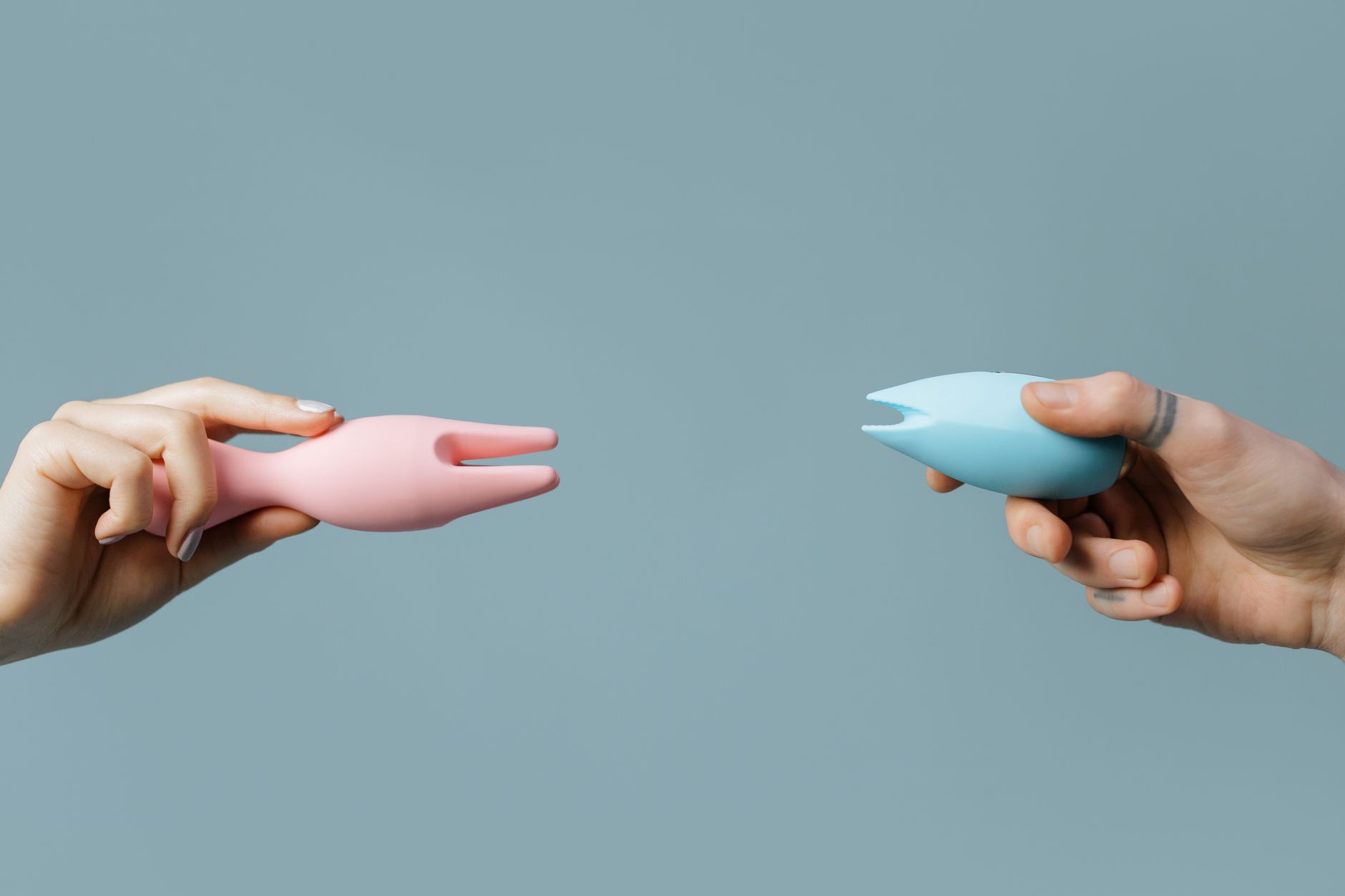
You're finally together again. The countdown is over. And then your body doesn't cooperate. Touch feels foreign. Pleasure doesn't arrive on schedule. You're wondering if you've forgotten how to want your partner, or if something broke while you were apart. Neither is true. Long-distance relationships put your nervous system into a specific holding pattern. Rebuilding physical intimacy after months of screens and distance requires patience, not pressure.
Your body has spent months learning that physical connection isn't available. That's not an emotional problem. That's a neurological one. The pathways that trigger arousal, the reflex that says "yes, now is safe," the muscle memory of pleasure with this specific person. They all get quieter when they're not being used.
Add to that the pressure. You're together. Finally. Everyone expects you to fall into bed like you've been waiting months (you have). That expectation itself kills arousal. Your nervous system is already recalibrating. Now it's also performing.
Third layer: your body might feel genuinely different after months apart. Weight shifts happen. Hormones fluctuate. Pelvic floor tension increases with stress. You might not feel like yourself in your own skin, which makes inviting a partner in feel even stranger.
Lemon clitoral vibrators work differently than other toys in one critical way for long-distance reconnection. They create sensation that doesn't depend on your partner's presence or skill. You're not waiting for touch that might not land right. You're not performing arousal. You're building it independently first.
That separation matters. When you use a lemon vibrator solo, you're relearning what your body wants without an audience. Then, when your partner is involved, you're sharing something you've already rebuilt. Not asking them to fix it.
The suction design of these toys is particularly useful here. It doesn't require the same kind of mental surrender as other stimulation methods. Suction feels more like something happening to you than something you have to earn. That passive quality can be what your nervous system needs to drop back into pleasure.
I recommend starting solo, even if you're desperate to reconnect with your partner immediately. Spend two to three weeks using a lemon vibrator by yourself before involving them. This isn't rejection. It's repair work.
Start in a space where you feel completely safe. Not in bed if bed still feels like performance space. A bath works. The couch. Somewhere you can close your eyes and remember what pleasure feels like when there's zero expectation.
Begin with pattern one or two on whatever lemon toy you choose. Your body is relearning. Slow buildups work better than jumping to intensity. Let yourself take fifteen to twenty minutes. No clock. No goal except sensation.
Notice what you notice. Are certain patterns better? Do you want more suction or less? Is there a particular time of day when your body says yes more readily? These details matter because they're yours. Not yours and your partner's. Just you.
Once you've rebuilt some baseline comfort with your own pleasure, the conversation with your partner changes. Instead of "I'm sorry my body isn't working," it becomes, "Here's what I learned I like. Can we explore this together?"
Introduce the lemon vibrator as a tool for both of you, not a workaround for your inadequacy. Many couples find that using a lemon clitoral vibrator together actually deepens connection after long-distance because it takes the pressure off. Your partner isn't solely responsible for your pleasure. They're participating in it.
Start with touching and conversation. No expectation of anything becoming sexual. Let your partner touch the vibrator while you're using it. Let them see what makes you gasp. Let them ask questions. This rebuilds physical intimacy in layers instead of expecting it to snap back to normal overnight.
Long-distance relationships end in two ways: you break up, or you rebuild. Rebuilding is harder than people admit. It requires accepting that you're not the same couple you were before. Your bodies are different. Your nervous systems are different. Your relationship is different. That's not failure. That's growth.
Many couples I work with try to skip the awkwardness by jumping straight back into how things were. That creates resentment because it ignores what actually happened. You were apart. Your bodies felt that. Now you're together and they're remembering.
Using a lemon vibrator isn't about fixing this faster. It's about fixing it honestly. You're saying to your body: I see you. I know this is strange. I'm going to rebuild this at your pace.
Week one: Solo exploration. Learning what your body still remembers. Fifteen to twenty minutes, no pressure.
Week two to three: Building consistency. Same time, same space if possible. Your nervous system loves predictability. It helps arousal show up.
Week three to four: Partner introduction. Conversation first. Touching the toy together. No requirement that it becomes sex.
Week five onward: Integration. Using the lemon vibrator as part of partnered sex, but also continuing solo use. Long-distance didn't end just because you're physically together. Your nervous system might still need solo time to feel safe.
Some couples move faster. Some take longer. The timeline isn't the point. The consistency is.
Talk to your partner before you introduce the toy. Not in the moment when clothes are coming off. Actually talk. Say something like: "I've realized I need time to rebuild comfort with my body after we've been apart. I want to use a lemon vibrator to help with that. I'd love your support, but I need to start solo."
Most partners actually feel relief hearing this. It reframes what's happening from "something is wrong with you" to "we're both adjusting."
If your partner feels threatened or sees it as rejection, that's a different conversation. That's about their insecurities, and it belongs in a separate moment, ideally with a therapist. Don't try to fix your partner's fear by abandoning your own healing. That never works.
Sometimes you use a lemon clitoral vibrator and nothing happens for weeks. That's information, not failure. Your nervous system might need more time. Or your stress levels might still be too high. Or you might benefit from deeper conversation about what long-distance actually did to your sense of safety in the relationship.
If arousal truly won't return after a month of consistent solo use, and your relationship felt solid before the separation, talk to your doctor. Certain medications, hormone fluctuations, and undiagnosed anxiety can all flatten desire. Those are treatable.
More often though, the issue isn't medical. It's that you're still operating from a nervous system that learned "this isn't available." Pleasure works on that subconscious level. You can want your partner deeply and still have your body refuse arousal until it believes it's safe again.
Couples who rebuild slowly after long-distance often report that their sex life becomes better than it was before. Not because the separation was good. But because rebuilding forces you to actually talk about pleasure instead of assuming. It forces you to stay present instead of taking touch for granted.
A lemon vibrator isn't the magic fix. It's a tool that says: I'm not waiting for my body to automatically return to normal. I'm actively rebuilding it. And I'm inviting you into that process.
There's no standard timeline because "normal" is a moving target. Your body didn't just sit still while you were apart. It adapted. Most couples see meaningful reconnection within four to six weeks of consistent, low-pressure physical contact. But "normal" might actually be better than before because you're both more intentional now. The goal isn't speed. It's rebuilding with honesty.
Yes, if you frame it wrong. If you introduce it as "let me show you I still work," it becomes performance. If you introduce it as "let's explore this together," it becomes connection. The language you use matters. You're not fixing yourself. You're rebuilding together.
Completely normal. Long-distance trains you to be emotionally guarded. You can't lean on physical presence for comfort. You learn to be independent. That independence doesn't turn off when you reunite. You have to actively re-learn how to rely on each other. A therapist specializing in long-distance relationships can help with this faster than you can alone.
Start with you learning your body alone, then move to your partner observing, then to using it together. That progression helps your nervous system adjust at each step. Jumping straight to partnered use skips the part where you rebuild safety with yourself, which is the foundation everything else sits on.
That's worth exploring with a therapist because it suggests something deeper than just physical awkwardness. Years of long-distance can create real relationship wounds. A lemon clitoral vibrator can help with the physical piece, but you might also need to address whether you actually want to rebuild this relationship or whether the distance became the only thing keeping it functioning.
Absolutely. If the distance created anxiety that's still present even though you're together, the vibrator serves double duty. Solo use helps calm your nervous system while also rebuilding pleasure. Partner use helps create moments of shared safety. Just don't expect the toy to fix the underlying anxiety. That requires other support too.
Rebuilding intimacy after long-distance is patient work. It's slow. It feels unglamorous compared to the reunion fantasy everyone sells you. But couples who do it with honesty come out the other side with deeper connection because they've actually talked about pleasure instead of assuming it.
A lemon vibrator is a tool that makes that conversation easier. It takes the pressure off your partner and puts the focus where it belongs: on your own body learning to trust pleasure again.
If you're ready to start rebuilding, the first step is solo. Give yourself permission to take the time you need. Your nervous system will thank you. Your relationship will too.
Questions about how to navigate this transition? We're here to help. Reach out to us and we can talk through your specific situation.