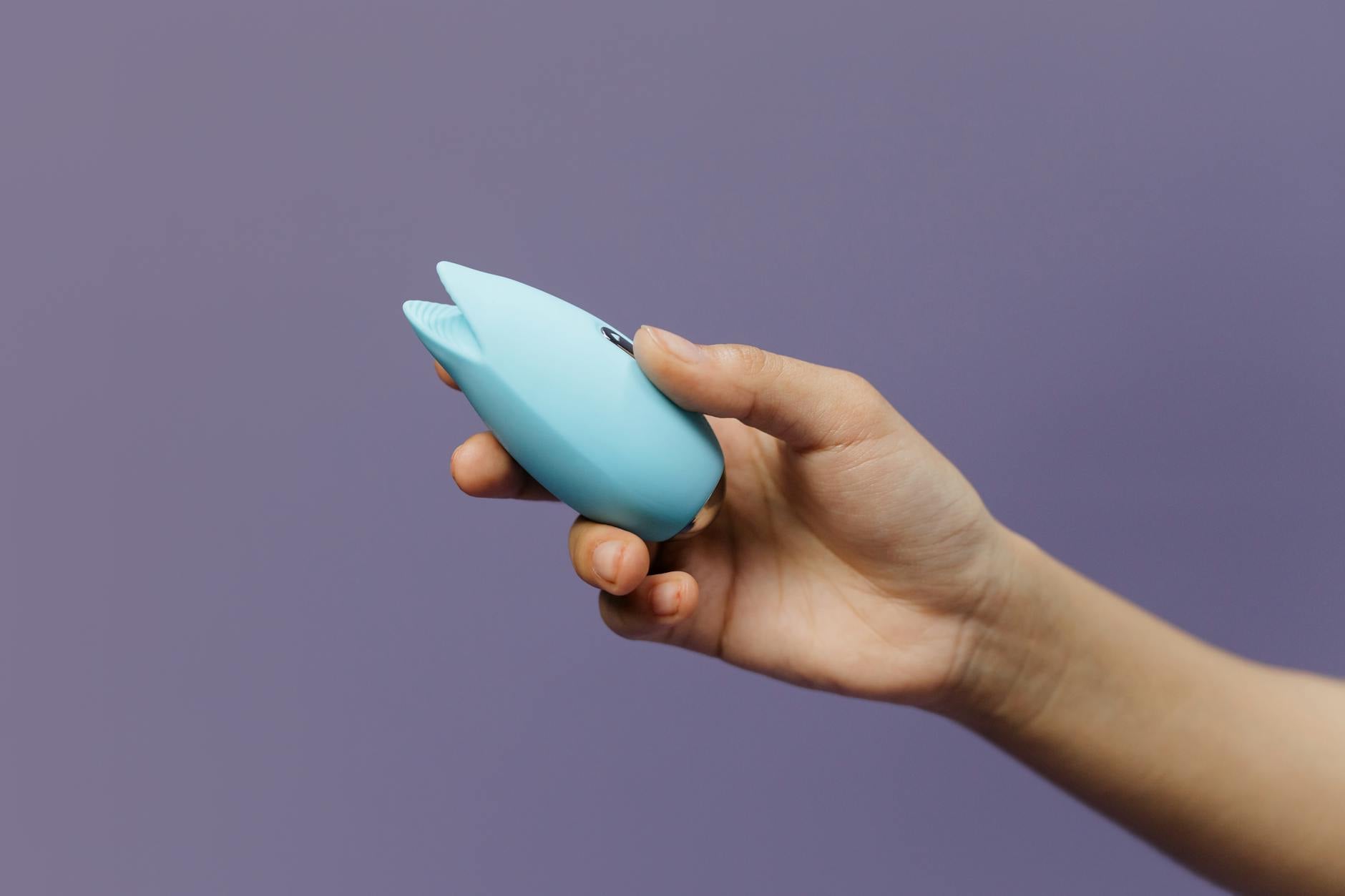
How to Use Lemon Vibrators When You're Afraid of Orgasm or Vulnerability
Fear of letting go, past trauma, or emotional overwhelm can hijack pleasure. Here's how lemon adult toys and a gentler approach rebuild your sense of safety.
Orgasm anxiety is more common than you'd think. Sometimes it shows up as complete numbness during sex. Sometimes it's a wall that hits right before climax. Sometimes you avoid touch altogether because you know what's coming and your nervous system says no.
Here's what I've learned working with couples and individuals through this: fear of orgasm isn't usually about the orgasm itself. It's about what the orgasm might mean. Loss of control. Vulnerability. Being seen. Being too much. Not being enough. The body protecting itself from something that feels unsafe.
Lemon clitoral vibrators can actually help rewire this. Not by forcing anything, but by giving you back agency over your own pleasure.
Your nervous system has a job: keep you safe. When it's learned to associate pleasure or intimacy with pain, shame, powerlessness, or being overwhelmed, it builds a gate. That gate is smart. It's protecting you. But it also locks out joy.
Orgasm anxiety often has roots in:
Past trauma or abuse. Your body remembers. Even if your conscious mind has moved past it, your nervous system hasn't. Orgasm means vulnerability, which used to mean danger.
Perfectionism or control. Some people fear orgasm because they can't control it. They can't perform it. It's messy or loud or takes too long. The moment when you stop managing and just feel terrifies you.
Religious or cultural conditioning. Pleasure got wrapped up with shame early on. Your body learned that wanting feels wrong.
Relationship patterns. You might have learned to prioritize your partner's pleasure over your own, or to equate sex with obligation instead of joy. Now your body resists.
Grief or dissociation. After major loss or trauma, your nervous system numbs out. Pleasure feels impossible or even offensive.
None of these are your fault. And they're all workable.
A lemon clitoral vibrator is a tool, not a fix. But it can be the right tool at the right moment. Here's why:
1. It puts you in control. With a partner, there's a power dynamic, even a gentle one. You might be managing their experience, reading their cues, performing arousal. A vibrator is just you and your body. You set the speed. You stop whenever you want. You can't disappoint a device.
2. The sensation is predictable. Suction-based lemon vibrators like the Lem work through gentle pressure and rhythm, not sharp stimulation. That predictability is calming for nervous systems that are on high alert. You know what's coming because you're controlling it.
3. It bypasses the performance trap. You don't have to look a certain way, last a certain amount of time, or come on anyone else's timeline. That removes a huge layer of anxiety. You're not trying to achieve anything. You're just seeing what your body can feel when it's not scared.
If orgasm anxiety is real for you, here's how to approach this gently.
Session 1: Just hold it. Don't use the lemon vibrator yet. Just get it in your hands. Look at it. Let your nervous system get used to it being nearby. Some people need three or four sessions of this before anything else happens. That's perfect.
Session 2: Turn it on, no contact. Set it to the lowest pattern. Let it run in your hand. Listen to it. Feel the vibration from a distance. Notice what comes up. Are you bored? Scared? Curious? All of those are data.
Session 3: Outer thigh or inner arm first. Not directly on your vulva. Your thighs and arms have different nerve endings. Lower stakes. You're teaching your body that this vibration doesn't have to mean anything except sensation. You're safe.
Session 4: Close, but not yet. Apply the lemon vibrator near your clitoris. Maybe the outside of your outer labia. Let the sensation spread. Notice where the fear is located in your body. Tight throat. Clenched belly. Locked jaw. Breathe into those places.
Session 5 and beyond: Direct contact, lowest setting. When it feels right. And if it never feels right in that session, that's also okay. You're not aiming for orgasm. You're aiming for safety. Orgasm is what happens when safety wins.
Breathing. This is non-negotiable. When we get scared, we hold our breath. Holding breath keeps you stuck. The moment you notice you're holding your breath, exhale completely and then breathe normally. Long exhales calm the nervous system. Practice this before you even touch the lemon vibrator.
Talking to yourself. Your inner voice matters. If you're thinking "Come on, just relax, why is this so hard?", your nervous system hears the pressure. Instead, try "I'm safe. I'm in control. My body gets to decide." Sounds cheesy. It works.
No goal. The single biggest sabotage when you have orgasm anxiety is treating the vibrator like a performance. "Okay, I'm going to come this time." No. You're going to feel whatever comes up and be okay with it. Pleasure is the goal, not orgasm. If orgasm happens, great. If it doesn't, you still got to feel good, which is the actual win.
You're using your lemon adult toy, it feels good, and then suddenly you notice you're holding your breath or you've gone numb. This happens. It doesn't mean you failed.
Pause. Stop the vibrator. Take three long breaths.
Name it. "My nervous system just hit the brakes. That's okay. That means something triggered." Don't shame yourself for it.
Get curious, not critical. What happened right before the freeze? Did intensity spike? Did your mind go somewhere? Did you start performing instead of feeling? Just notice.
Move on. If you want to try again, reset to a lower pattern or move to a less charged area. If you want to stop, stop. You can always try again tomorrow.
Freeze responses get quieter the more times you practice them gently. Your nervous system learns: "Oh, when I feel scared here, my person just pauses and breathes. We're safe."
Lemon clitoral vibrators are incredible tools, but if orgasm anxiety comes from trauma, you probably need more than a tool. A trauma-informed therapist or sex therapist can help you understand what your nervous system is protecting you from and give you skills to feel safe during pleasure.
If the fear is relational, couples work matters. Some of the fear might actually be about trust with your partner, not about the orgasm itself. A therapist can help you rebuild that.
If it's rooted in something like religious shame or perfectionism, that's also workable with the right support. You don't have to white-knuckle your way through this alone.
Using a lemon vibrator in tandem with therapy is powerful. The vibrator becomes a safe space to practice what you're learning. You can test new nervous system states in a low-pressure moment.
Here's something I see happen in my practice: people who heal their relationship with their own pleasure often heal their relationship with partners too. When you stop being afraid of your own body, you can actually be present with someone else's.
Right now, though, the work is just you and your body learning that pleasure is something you deserve. That's the foundation everything else is built on.
Numbness is a protective response. Your nervous system is doing its job. This doesn't mean the vibrator won't work eventually. It means you need to spend more time in the early sessions. Hold it, turn it on nearby, let your body adjust. Numbness can start to lift after a few weeks of gentle exposure. If it doesn't, or if it's paired with other dissociative symptoms, work with a therapist. Your body might need help learning how to feel again.
Completely normal. Pleasure after trauma can be emotional. You might be grieving what happened to you, or releasing tension you've held for years. Let the tears come. Keep the vibrator nearby but turned off if you need to. Sometimes the biggest breakthrough is just letting yourself feel something other than fear.
Yes, with care. Start with the gentlest approach: holding it, feeling its weight, turning it on from a distance. Your nervous system needs time. Some people benefit from working with a trauma-informed therapist in parallel. That therapist can teach you grounding techniques before you use the vibrator, which helps a lot. There's no rush. Slow is right.
Stress, relationship changes, or even random reminders of past trauma can reactivate the fear response. This doesn't erase your progress. It means you're human. Take a break if you need to. Go back to earlier steps with the vibrator. Why lemon vibrators feel different when anxiety is high walks through this specifically. Your body knows what it learned before. You can learn it again.
Not necessarily. This is your healing journey. You get to decide when or if to involve them. Some people find it helpful to eventually share, because it opens up vulnerability and honesty. But there's no obligation. If you do decide to tell them, frame it as something you're doing for yourself, not something about them or the relationship. "I'm working on feeling safer in my body" is plenty.
It depends on the source and depth of the fear. Some people see shifts in a few weeks. Others need months or a year. There's no standard timeline. What matters is that you notice changes: you breathe easier, you touch yourself without tensing up, you stay present for longer. Those small shifts add up. Trust the process, not the speed.
Orgasm anxiety isn't something you have to live with forever. Your nervous system learned that pleasure wasn't safe. It can learn something different. A lemon vibrator won't rewrite that story alone. But in your own hands, at your own pace, it can be the first place you tell your body: "You're safe now. I'm listening. Let's try again."
That's not small. That's everything.
If you're working through bigger trauma patterns and need guidance beyond what you can do alone, reach out. Contact The Lemon Massagers or find a trauma-informed therapist in your area. You don't have to do this solo.