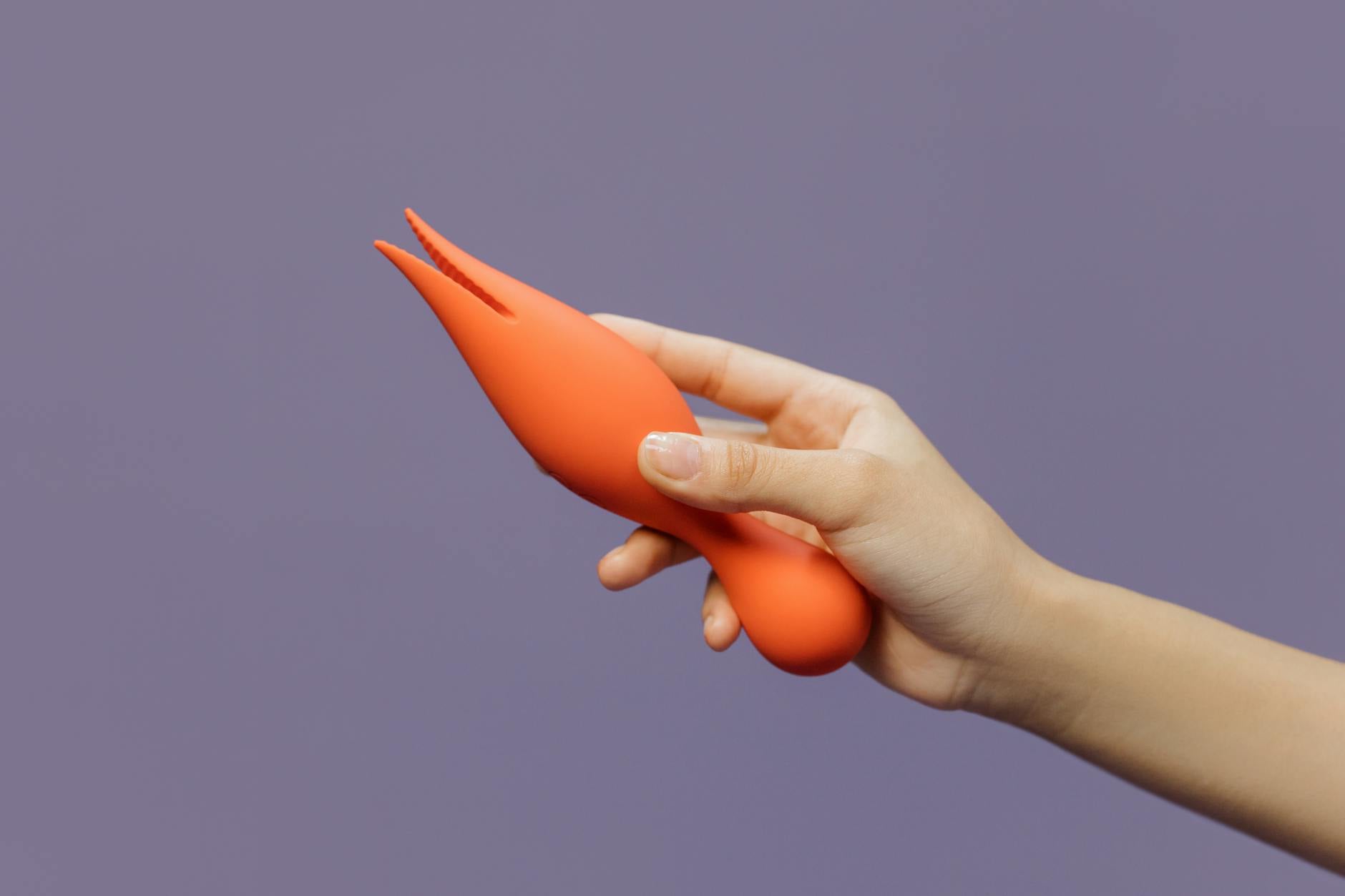
How to Use Lemon Vibrators When You Feel Disconnected After Major Relationship Transitions
Promotions, moves, health crises, and blended families rewire intimacy. Here's how lemon vibrators can help you reconnect when everything else has shifted.
Big life events don't just change your calendar. They rewire your nervous system. A promotion means late nights. A move means boxes instead of date nights. A health crisis or a blended family integration means you're running on fumes. And somewhere in that scramble, physical intimacy becomes another thing on the to-do list instead of something that connects you.
Here's the thing: that disconnection is not a sign your relationship is broken. It's a signal that your body hasn't caught up to your new reality yet. Lemon vibrators and other clitoral vibrators can actually help with that transition. Not as a Band-Aid. As a doorway back.
When life shifts, your nervous system goes into efficiency mode. You're problem-solving, adjusting, maybe grieving what you left behind. Your brain is literally in sympathetic activation. That's the "fight or flight" state. Sex requires parasympathetic dominance, which is "rest and digest." You can't force those systems to talk to each other.
Add to that the identity shift. You're not just the person you were before the transition. You're the version of yourself in this new context. Your partner is too. That means the dynamic you relied on for connection has fundamentally changed, even if you can't quite name how.
The disconnection feels like desire dropping, but it's usually less about wanting your partner and more about not knowing who you are anymore in relation to them.
I know this sounds counterintuitive. If you're disconnected from your partner, why add solo pleasure to the mix?
Because reconnecting with your own body separately from your partner is often the bridge. When you use a lemon vibrator alone, you're not performing. You're not coordinating. You're not managing your partner's experience. You're in your own nervous system, learning what feels good in this new version of your life.
That's the missing piece. You change. Your body changes. Your responses change. But nobody told you that. So you expect your pleasure to work the way it used to, and when it doesn't, you assume something's wrong with the relationship instead of just acknowledging: you need to get reacquainted with yourself.
Using lemon vibrators solo during a transition gives you data. It tells you: what turns you on now? What texture, what speed, what fantasy works for this version of you? That information is gold when you eventually share space with your partner again.
First: no agenda. If you approach this as "I need to want my partner more," you've already failed. The goal is pleasure for its own sake. You deserve that. Not as a marital strategy. As a human.
Second: consistency over intensity. Three times a week for ten minutes beats one marathon session. Your nervous system needs routine. It signals safety. During transitions, safety is what unlocks arousal, not novelty.
Third: environment matters. This isn't precious. You don't need candles or rose petals. But you do need a space where you won't be interrupted. A locked door. A time you know is yours. Even twenty minutes of guaranteed solitude changes your capacity to relax into sensation.
Start with the lowest setting on your lemon vibrator. Let your body adjust. You're not chasing orgasm. You're chasing the feeling of being present in your own skin. Orgasm will follow, but it's not the point yet.
Once you've spent a few weeks reconnecting with yourself, the conversation with your partner changes. You're no longer asking "Why don't I want you?" Now you're saying "Here's what I've learned about what works for me right now. Want to explore that together?"
That's a different conversation entirely. You're not blaming the transition or the relationship. You're offering information. You're saying "I'm still figuring out who I am in this new chapter, and here's what I'm learning."
Many couples find that using a lemon vibrator or other clitoral vibrators together during this phase actually accelerates reconnection. You're not having the old sex. You're learning new sex that fits this version of your relationship. That's not settling. That's evolution.
One practical note: if penetrative sex feels like the default, lemon vibrators actually give you permission to pause that. The suction sensation from a lemon clitoral vibrator is completely different from penetration. It demands presence. It doesn't let you zone out. That's a feature during reconnection, not a bug.
Here's what I see most often in my practice. The real disconnection isn't physical. It's that neither partner said out loud "We're changing. Our sex life is going to change. And that's okay." Instead, you both pretend you don't notice the shift, and shame builds silently.
Before you bring lemon vibrators into the picture with your partner, have the admission. "I feel disconnected. I think the transition shook us both. I'm trying to figure out how to feel like myself again, and I want us to do that together." That conversation is unglamorous and totally necessary.
If your partner gets defensive when you mention wanting to reconnect through pleasure, that's information too. It might mean they're also grieving the old dynamic. Or they're afraid that wanting something different means you're no longer satisfied with them. That's a separate conversation worth having.
Some couples move to shared exploration quickly. Others need more time. There's no timeline.
You know it's time to invite your partner in when you feel ownership over your own pleasure again. When you're not using the lemon vibrator as a "fix," but as something you genuinely enjoy. When you can say "I like this" without apologizing for it.
Then you might say to your partner: "I want to show you something I've been exploring." Not as a directive. As an invitation. Let them watch. Let them feel curious. Sometimes that's where reconnection starts. Not with synchronized pleasure, but with genuine interest in what's happening in your partner's body and mind.
Relationships are designed to flex. Promotions happen. Families blend. Health changes. Bodies age. Every single transition asks the question: are we going to renegotiate this, or are we going to pretend we're still who we were?
Lemon vibrators won't fix a relationship that needs real work. But they can absolutely help you reconnect with yourself during the season when everything else feels uncertain. And that reconnection with yourself is almost always the foundation for reconnecting with your partner.
Your pleasure matters. Not just as a sign of marital health, but as a signal that you're still you. Use lemon vibrators to remind yourself of that. Your body knows something your anxious brain doesn't yet. Trust it.
There's no fixed timeline, but most couples report a shift between 4 to 8 weeks of consistent solo and shared exploration. The key is regularity, not intensity. Your nervous system needs to learn that the new reality is safe. That typically takes a month or two of repeated positive experiences. Some transitions (blended families, major health events) take longer. The metric isn't "when does sex feel like it used to." It's "when does intimacy feel natural again in this new form."
Not unless you're hiding it out of shame. If you're exploring with intention and openness, most partners appreciate the vulnerability. The secrecy damages things more than the exploration. If you're worried about disclosure, start with conversation: "I want to reconnect with my own pleasure during this transition. I'm going to use some tools for that. I wanted you to know." That's honesty. That builds trust.
That's often less about the vibrator and more about fear that you're looking elsewhere or losing interest in them. The conversation to have is: "This isn't about you. This is about me learning how my body works in this new season. I want you involved eventually, but I need to figure this out first." Sometimes partners need reassurance that pleasure exploration isn't replacement. It's addition.
Wait until you've spent at least a few weeks solo. You need your own baseline of what feels good before bringing it into partner dynamics. Otherwise, you're managing two nervous systems at once, and that's harder work. Once you know your body again, shared exploration is often easier.
Start with honesty about the disconnection: "I've noticed we've drifted since the move/promotion/change. I don't think it's about us. I think we've both been in survival mode. I want to reconnect, and I think exploring pleasure together might help." Offer specifics: "I've been curious about this. Would you be open to exploring it together?" Make it collaborative, not prescriptive. And give them time to sit with it if they're hesitant.
Physical reconnection can unlock emotional reconnection, but they're not interchangeable. Pleasure can soften defenses and create moments of real vulnerability. But if there's unresolved anger or resentment about the transition, that needs its own conversation. Don't use lemon vibrators as a substitute for addressing the real emotional work. Use them as a complement to it. You might find that once you're present in your body together, the emotional conversation becomes easier.
Let's be real: major life transitions don't just challenge your relationship. They challenge your sense of self. Reconnecting with your body through lemon vibrators is a way of saying "I'm still here. I'm still present. I'm still capable of pleasure." That's not indulgence. It's resilience. If you're navigating disconnection and want support thinking through what comes next, reach out and let's talk about where you are.