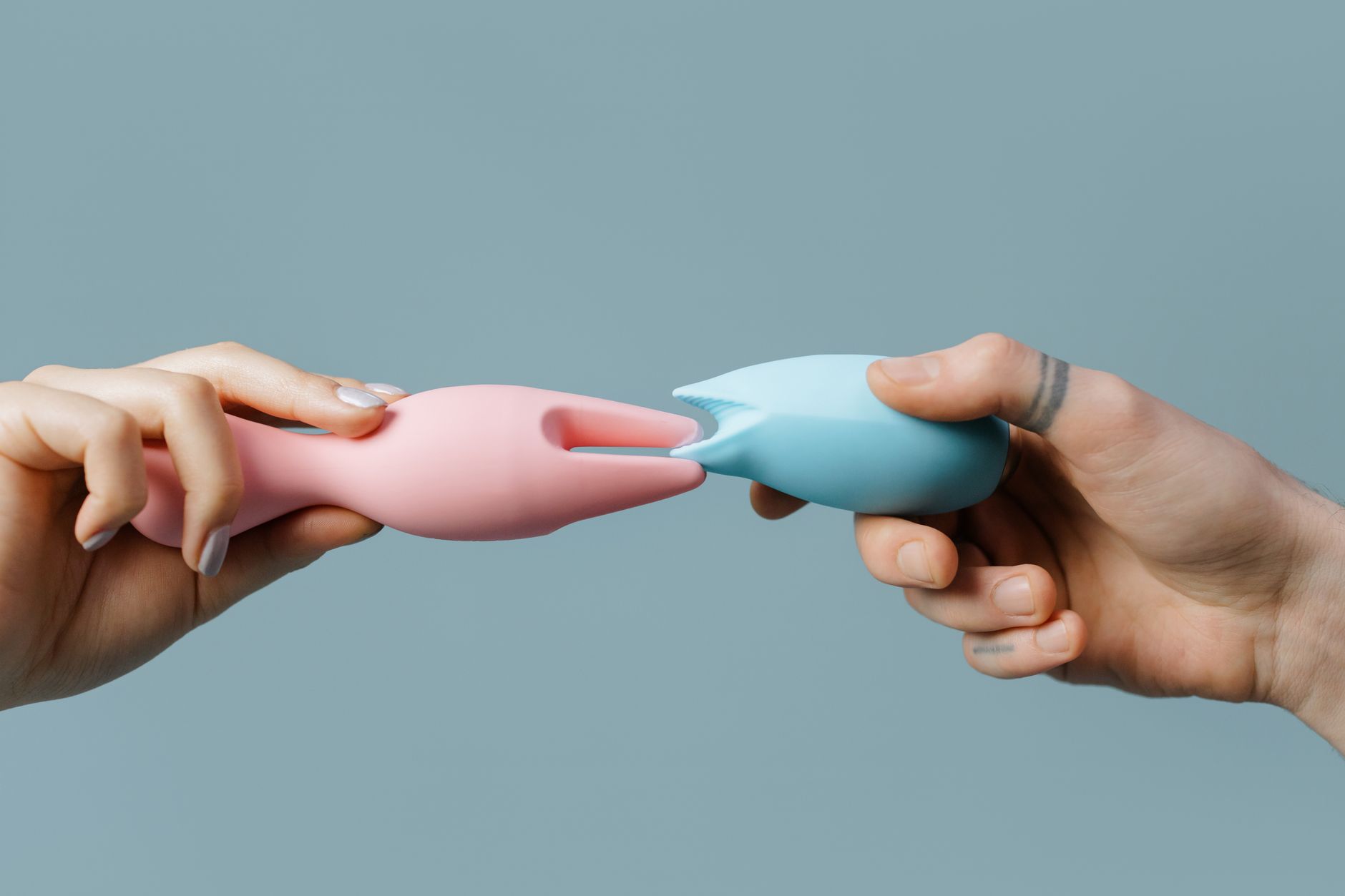
How to Use Lemon Vibrators When You Have Tender or Sensitive Tissue
Sensitive clitoral tissue doesn't disqualify you from pleasure. Here's exactly how to use air-suction vibrators like the Lem without pain or overwhelm.
Between you and me, sensitive or reactive clitoral tissue is one of the most common reasons people abandon vibrators entirely. You buy a lemon vibrator or any clitoral tool, try it, and it feels too intense, too sharp, or even painful. So you stop. And then you feel like you're the broken one.
You're not. Tender tissue is incredibly normal, and it has nothing to do with your capacity for pleasure. It just means your nervous system is wired for subtlety, which actually comes with advantages most people don't realize.
Several things can contribute to sensitivity or tenderness around the clitoris. Some are temporary. Some are structural. None of them are your fault.
Your tissue might be reactive because of friction sensitivity, where direct pressure or rubbing feels uncomfortable rather than pleasurable. Hormonal fluctuations also play a role. Low estrogen thins the tissue and makes it more reactive. Inflammation from conditions like vulvodynia or irritant contact dermatitis can cause localized tenderness. Nerve sensitivity varies wildly person to person—some people's clitoral nerves are just wired to respond to gentler input. Anxiety and pelvic floor tension can make everything feel sharper and more intense than it actually is.
There's also a learned component. If you've had painful sexual experiences in the past, your nervous system gets primed to interpret vibration as threat. Your body isn't being difficult. It's being protective.
This is where the design of lemon vibrators, particularly air-suction models like the Lem, changes everything. Traditional vibrators move side to side or up and down. They rely on friction and direct pressure. For sensitive tissue, that friction is often the problem.
Air-suction tools work differently. Instead of vibrating against the tissue, they create rhythmic suction that stimulates nerves without friction. Think of it like the difference between someone rubbing your skin hard and someone gently cupping their hand to draw blood to the surface. The sensations are completely different.
For tender or sensitive tissue, this distinction matters hugely. You get stimulation and intensity without the mechanical friction that causes reactivity. Many people with sensitive tissue report that the Lem is the first vibrator they've ever been able to use comfortably.
Here's the step most people skip. They assume low setting means weak. It doesn't. Low setting on the Lem means the suction pattern is gentler, not that the tool doesn't work.
Start at pattern 1 or 2. Spend at least 5 minutes exploring each pattern before you move up. Get curious about what each setting actually feels like rather than rushing to find intensity. Many people with sensitive tissue find their sweet spot at patterns 2 or 3 and never need to go higher.
The temptation is to work your way up immediately. Resist it. Low patterns give your nervous system time to register safety. They let your tissue warm up and respond naturally. They also teach you something crucial: you can get real pleasure without maximum intensity.
Where you place the Lem against your clitoris changes everything about how the sensation lands. Direct, centered contact feels most intense. Angled or off-center contact spreads the sensation and feels gentler.
Try placing the opening of the Lem slightly to one side of your clitoris rather than directly on it. Or angle it so the suction pulls skin around the clitoris rather than pulling the clitoris itself. You'd be surprised how much this softens the experience without reducing pleasure.
Height and distance also matter. Some people find it easier to tolerate sensation when they're more upright or semi-reclined, versus lying flat. Pelvic floor tension increases when you're flat on your back. Experiment with positioning until you find the angle that feels easiest.
Tissue that's dry or cold feels more sensitive. Full stop. Before you even turn on the Lem, spend time warming up your body and increasing natural lubrication.
Touch yourself without the toy first. Spend 10 to 15 minutes on other parts of your body—your chest, inner thighs, labia, the outer edges of the vulva. Let arousal build gradually. This isn't wasted time. It's essential groundwork. Your clitoris swells and blood flow increases when you're genuinely aroused, and that makes tissue more resilient and less reactive.
If natural lubrication isn't happening or isn't enough, use a water-based lube before you introduce the Lem. Lubrication reduces friction and creates a glide that many people with sensitive tissue find much more comfortable. It also helps the suction pattern feel less pulling and more like a gentle draw.
Most people don't realize that sensitive tissue and pelvic floor tension are often tangled together. When your pelvic floor is tight—which happens with anxiety, stress, or trauma—even gentle sensation can feel sharp or unpleasant.
Before you use the Lem, try a simple check-in. Place your fingers about an inch inside your vagina. If you feel a tight band of muscle, you've got pelvic floor tension. You can release it.
Here's what helps. Deep breathing, obviously, but specifically: inhale for a count of four, hold for four, exhale for six. On the exhale, consciously relax the muscles around your vaginal opening as if you're releasing a grip. Do this 10 times before you reach for the Lem. It sounds simple because it is, but it works.
This is where honesty gets tricky. Sensitive tissue sometimes needs you to work through initial reactivity. Your nervous system registers vibration as threat at first. Over time, with gentle, repeated exposure, it learns that the sensation is safe.
But there's a difference between mild discomfort that settles after a minute and sharp pain. Discomfort that fades is fine. Pain that increases is a signal to stop.
If you feel stinging or burning that doesn't ease within the first 30 seconds, turn off the Lem and take a break. If tenderness shows up day after use, you went too hard. Dial back the setting, the duration, or both.
Many people with sensitive tissue get great results using the Lem 2 to 3 times per week at low settings rather than daily. Your tissue adapts and becomes less reactive when you give it recovery time.
Here's the thing nobody tells you about tender tissue: it's not a limitation. It's specificity. Your body is telling you exactly what works and what doesn't. You don't need to override that signal. You need to honor it.
People with sensitive tissue often end up having more intense orgasms once they find their rhythm, because they've learned exactly where the edge between pleasure and overwhelm lives. You know your clitoris intimately. You know what pattern works. You're not searching. You're not compromising.
Many of my clients report that learning to use a tool like the Lem with sensitive tissue taught them more about pleasure than years of other vibrators ever did. Not in spite of the sensitivity. Because of it.
Normal sensitivity feels uncomfortable but not painful. You might feel sharp or overwhelming sensation, but it settles quickly and doesn't create lasting irritation. Vulvodynia or clitoral pain disorder is different. It's persistent, often burning or stinging, and doesn't improve with gentle touch. It gets worse. If you suspect vulvodynia, talk to a gynecologist or pelvic pain specialist before introducing any vibrator. Treatment (usually topical or oral medication) often resolves the sensitivity, and then tools like the Lem become accessible.
If vaginismus is present, internal penetration is usually off the table first. But the Lem is external, so it depends on whether your clitoral tissue itself is sensitive or whether the sensitivity is mainly around penetration. Many people with vaginismus use external clitoral vibrators comfortably once they work with a pelvic floor therapist. Start at the lowest setting and go slowly. Pair it with relaxation work on your pelvic floor.
No. In fact, the opposite usually happens. Gentle, repeated exposure to sensation teaches your nervous system that the input is safe. Over time, many people find they can tolerate higher settings without discomfort. But your nervous system sets the pace. Some people stay at patterns 1-3 and that's their happy place. That's fine. You don't need to graduate to higher intensity to be doing pleasure right.
Try using a thin barrier. Place a cotton cloth or thin silk between the opening of the Lem and your clitoris. This mutes the sensation slightly while keeping the pattern and rhythm intact. For some people with extreme sensitivity, this is the missing piece. You get the benefit of the tool without the full intensity.
If tenderness lasts a few hours and then resolves, you're probably okay to use the Lem the next day or the day after. If tenderness lingers past 24 hours, wait 2 to 3 days between uses. Your tissue needs recovery time. This isn't a sign you're doing something wrong. It's your body telling you to pace yourself. Many people find 2 to 3 times weekly at low settings gives them the pleasure they want without pushing tissue into irritation.
Completely. Anxiety contracts the pelvic floor and puts your nervous system on alert. Even mild sensation feels sharp when your nervous system is primed for threat. This is why breathing work and pelvic floor release are sometimes more useful than technique changes. Address the underlying tension first. Then try the Lem again. You'll often find the sensitivity was partly nervous system response, not just tissue reactivity.