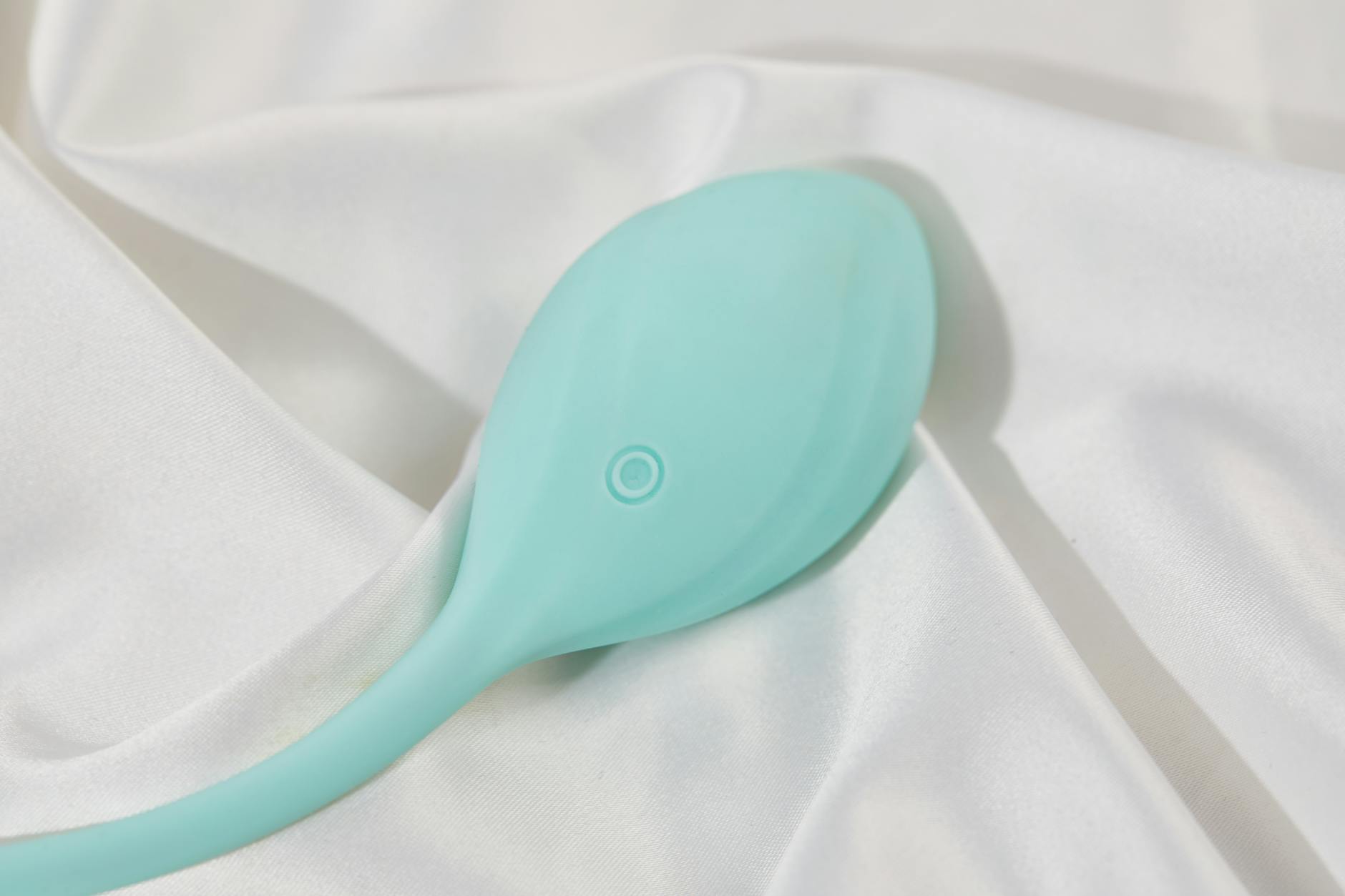
Honestly, the most common question I get about clitoral vibrators is: how fast should this work? People want a timeline. A benchmark. Proof that they're "doing it right." And then they get their lemon vibrator, the timer in their head starts running, and suddenly the whole thing feels like a productivity metric instead of pleasure.
Here's the truth: orgasm time with a lemon sucker or any clitoral vibrator ranges from 30 seconds to 20 minutes. All of that is completely normal. The speed says almost nothing about your body, your device, or your capacity for pleasure.
But there are real things that affect timing. And I'm going to walk you through all of them so you can stop wondering if you're broken and start actually enjoying the experience.
Studies on clitoral vibrator orgasm time aren't huge, but the data we have is useful. Average? About 5 to 7 minutes from start to finish, though that's really just the middle of a very wide range. Some people come in under two minutes. Others take 15 or more. Both are fine.
The interesting part is that vibrators tend to compress the timeline compared to manual stimulation. That's partly because suction-based devices like the Lem vibrator are more consistent and more precise than hands can be. There's no fatigue, no wavering pressure, no accidental loss of the exact spot.
But here's what confuses people: faster doesn't mean better. I've worked with many clients who have quick orgasms that feel shallow, and slow orgasms that feel transcendent. Speed and satisfaction are basically unrelated.
Three major factors affect timing more than anything else. None of them are your fault.
Mental load. If you're thinking about whether you're taking too long, you're already slower. Performance anxiety, self-consciousness, or just general distraction (bills, work emails, that text you didn't send) can add 3 to 10 minutes. Your brain has to be somewhat present for your body to finish the job. That doesn't mean you need to be thinking about pleasure the whole time, but you can't be actively worried either.
Arousal level going in. This is huge. A lemon vibrator works on already-aroused tissue. If you start completely cold, it'll take longer than if you've already been thinking about or doing something that turns you on. Most people need 5 to 10 minutes of foreplay or mental buildup before a vibrator becomes most effective. It's not that the vibrator is slow. It's that you're asking it to do the whole job from zero.
Hormonal timing. Where you are in your cycle, whether you're on hormonal birth control, antidepressants, or dealing with natural hormonal fluctuations all measurably affect arousal speed. Some days a lemon clitoral vibrator gets you there in three minutes. Other days, the same device at the same intensity takes twice as long. This isn't a problem. It's just biology.
Longer isn't the same as wrong, but I get why it feels that way.
If you're consistently taking 15 or more minutes with a device like the Lem, here are the actual culprits. First check: are you on SSRIs or another antidepressant? These are some of the most common orgasm-delayers. Check our post on SSRIs and lemon vibrators for specifics.
Second: is your pelvic floor tight? Tension in the pelvic floor muscles actually slows arousal and can make orgasm feel more distant even when sensation is clear. This is fixable with intentional relaxation (the opposite of Kegels). Breathe into your pelvis, soften your thighs, let everything release instead of clench.
Third: are you using enough lubrication? This one surprises people, but even with a clitoral vibrator, moisture changes everything. If tissue is dry, the vibration can feel almost abstract instead of pleasurable, and your body won't respond as quickly. Water-based lube is your friend here.
Fourth: are you on hormonal birth control? Some formulations can genuinely slow arousal. If you've recently switched and suddenly a lemon vibrator feels less responsive, it might be the pill, not the device.
The goal here isn't to race. It's to remove friction so you can enjoy yourself without the mental overhead.
Foreplay, mental or physical. Spend 10 minutes thinking about something that turns you on, or ask your partner to touch you first, before the lemon sucker even comes out. You'll be surprised how much faster the device works when you've already started the arousal chain.
Find your pattern sweet spot. The Lem has multiple intensities and patterns. Most people have a clear favorite that hits faster than others. Experiment before you get to the moment where you want an orgasm. Figure out which pattern 3 or pattern 5 actually works for your body, so when you're in the moment you're not hunting.
Let your partner help. If you have one, sometimes the anticipation and interaction with a partner (even if they're not directly stimulating you) speeds things up significantly. Newish relationship energy is real, and it genuinely affects how quickly your body responds.
Drop the expectation. This one is the hardest. If you go in thinking "this should take five minutes," you've already added time. Your body tenses, your brain worries, your nervous system goes a little defensive. Go in thinking "I'm going to spend the next 15 minutes on myself and see what happens." Ironically, you'll usually finish faster.
Orgasms that build over 10 to 15 minutes tend to feel bigger, fuller, and more integrated. Your entire body is involved. You're in a deeper state of arousal. The orgasm itself often has more depth. Fast orgasms can feel like relief. Slow orgasms often feel like celebration.
Some people use a lemon clitoral vibrator for just 5 minutes and stop, then return to it later. The cumulative effect is sometimes more satisfying than one continuous session. Some people use lower intensity settings and take longer, which can feel very different from racing through on high. Different isn't worse. Different is just different.
Timing does matter in one specific situation: if you're trying to coordinate with a partner. In that case, knowing your baseline is useful so you can communicate. "I usually need about 8 minutes" is way more helpful than frustration.
Timing doesn't matter if you're alone. Doesn't matter if you're exploring your body and not trying to achieve a specific outcome. Doesn't matter if the orgasm is the point or if the pleasure is the point. Those are different things, and one isn't better.
There is no "should." Normal ranges from two minutes to 20. Focus on whether sensation feels good, not whether you're on some invisible schedule. If a lemon sucker is working for you, timing will usually fall into a comfortable range naturally.
Hormones, stress, arousal level, medication timing, how recently you had sex, what you've been thinking about all day. Your body is not a machine. Natural variation is completely normal and actually a sign your system is responsive.
No. Research shows no correlation between speed and satisfaction. Some people prefer slow builds. Some prefer quick release. Neither is better. The best orgasm is the one that feels right to you in that moment.
Most likely no. You might be in a different part of your cycle, stressed, on new medication, or just exploring with less novelty energy. Bodies adapt. Try varying intensity or pattern, use more lube, or step away and come back fresh.
Yes, but not by trying harder. Mental relaxation, good foreplay, pelvic floor awareness, and removing distractions actually reduce time more than increased intensity does. Forcing it usually makes you slower.
Not necessarily. Highest intensity isn't always fastest. Many people find a mid-range pattern actually hits more effectively than maximum. Experiment when you're not trying to achieve an orgasm. Your future self will thank you.
Your lemon vibrator is a tool for pleasure, not a test you can fail. Whether you come in three minutes or twenty, whether that orgasm feels explosive or subtle, whether you use the device alone or with a partner. It's all right. What matters is whether the experience feels good and whether you feel good after. Everything else is just noise.
If you're curious about how your lemon sucker or Lem vibrator works best for your specific situation—whether that's managing timing with a partner, dealing with a medication side effect, or just wanting to deepen the experience—reach out. I'm here to help you figure out what actually works for your body.